Virtual production using an LED volume and Unreal Engine lets low-budget filmmakers shoot convincing exterior scenes, alien landscapes, and period environments entirely indoors — cutting location days, weather delays, and travel costs that would otherwise blow a small budget. Sinfull Studios operates virtual production capability in Regina, Saskatchewan, making this technology accessible to prairie indie productions without flying a crew to Vancouver or Toronto. The economics only make sense on certain projects, but when they do, the savings are real and the creative control is substantial.
What does an LED volume actually do on a film set?
An LED volume is a curved wall — sometimes a full stage wrap including ceiling — of high-resolution LED panels displaying a real-time rendered environment generated in Unreal Engine. The camera photographs the actor against that background, and because the panels produce actual photons at the right colour temperature and intensity, the light falling on the actor’s face matches the scene behind them. You get a practical performance with real interactive lighting, captured in-camera, with no green-spill cleanup in post. The background moves with the camera through lens metadata, so parallax tracks correctly. What used to take weeks of rotoscoping and compositing work can come out of the camera already finished.
Where does virtual production save money for indie film budgets?
The savings stack up in specific places. A location day in a remote Saskatchewan field costs a crew call, transportation, catering, permits, and insurance — and you still lose half the day if the weather turns. Inside a volume, you shoot the same environment in a climate-controlled space on a predictable schedule. The biggest budget wins tend to be:
- Eliminating travel to distant or expensive locations — no flights, no hotel blocks, no extra shooting days lost to logistics
- Compressing schedule — a two-day location shoot can often become a single studio day when weather and access are no longer variables
- Reducing post-VFX cost — final-pixel backgrounds rendered in-camera mean fewer VFX shots to farm out
- Lowering lighting crew overhead — the volume itself is a large, controllable light source that replaces a significant portion of the exterior lighting package
When does the LED volume not save money?
This is the honest part most marketing skips. Volume time costs money — the stage rental, the Unreal operator, the environment build. If your script calls for two scenes in one simple location, driving out to that location is almost certainly cheaper. The technology earns its cost when you need multiple distinct environments, when a real location is logistically difficult or genuinely unavailable, or when you need weather and lighting conditions that Saskatchewan’s climate cannot reliably provide on your shoot dates. A short film with a $15,000 budget shooting one exterior scene in a Regina park does not need a volume. A 20-minute sci-fi short with five different world environments absolutely might.
What does “final pixel in-camera” mean for a low-budget post pipeline?
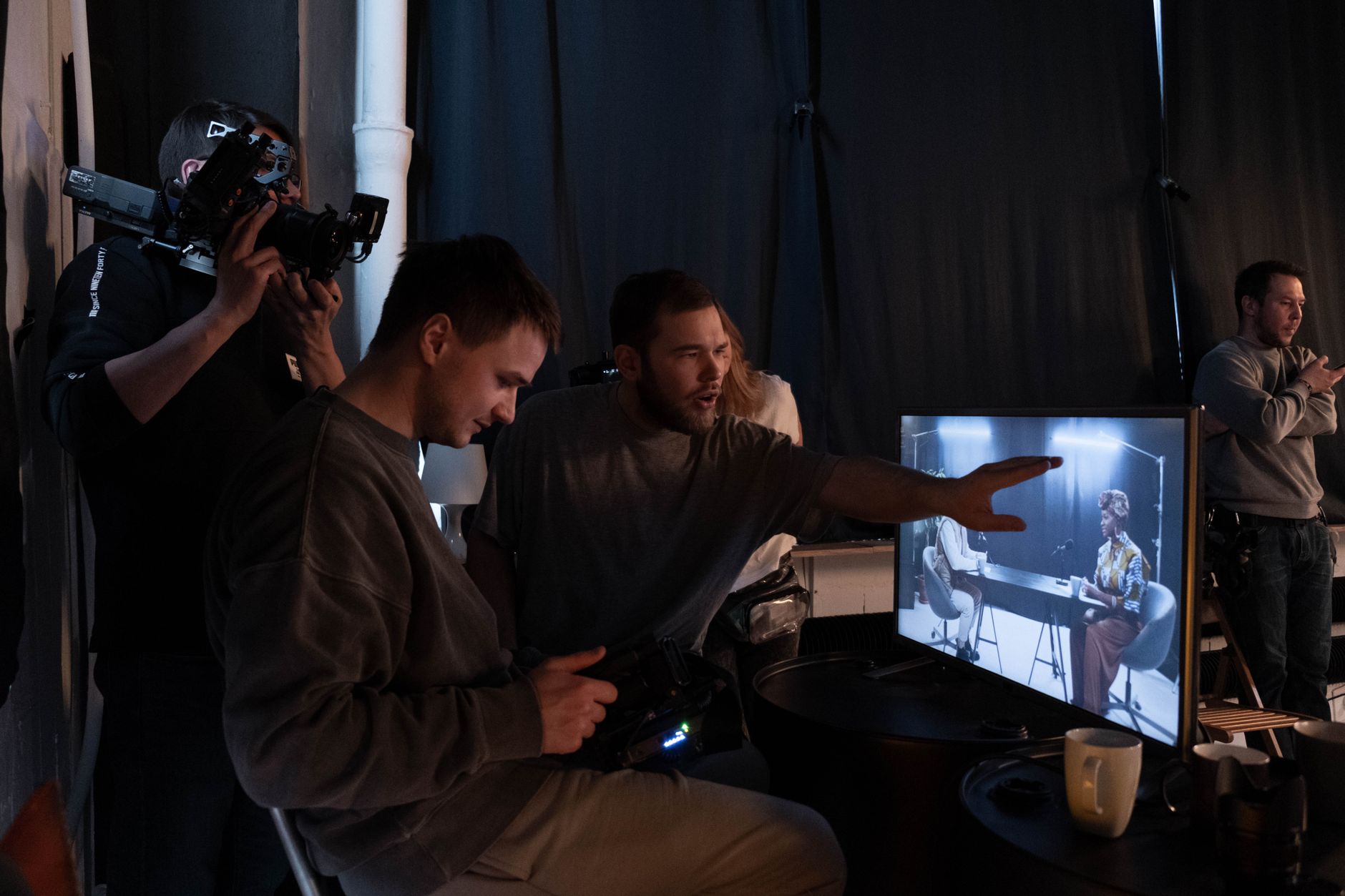
On a conventional VFX shoot, the on-set supervisor is constantly making notes and tracking data so the compositing team can rebuild the scene later. That downstream work is expensive and time-consuming. In-camera VFX flips that — the compositor’s job is largely done by the time the take is called. For a low-budget production, that means less reliance on a VFX house, faster turnaround, and a locked image you can actually evaluate on set before you wrap. You know what you have before the crew goes home, which is a significant risk reduction for a production that cannot afford reshoots.
How does Unreal Engine fit into a Saskatchewan indie production workflow?
Unreal Engine is the real-time renderer that drives the LED panels. Environments built for a game, an architectural visualization, or a previous film production can be repurposed for a shoot, which drives down environment build costs considerably. Sinfull Studios works in Unreal for both game development and virtual production, which means the same environment assets can serve multiple production types. For a Saskatchewan filmmaker, that shared pipeline is a practical advantage — you are not paying to build bespoke environments from scratch for every project if the library of existing scenes continues to grow.
What types of Saskatchewan projects benefit most from this approach?
Based on the economics, the strongest candidates are science fiction and fantasy shorts that require world-building beyond what the prairies naturally offer, period pieces where period-accurate streets or interiors are too expensive to dress on location, commercial and branded content where a client needs a specific look with controlled conditions and a tight timeline, and music videos where the visual concept demands environments that do not exist in Regina or White City. Documentary and reality formats rarely need it. Drama shooting in contemporary Regina settings almost never needs it. The more your script departs from what is physically accessible, the stronger the case becomes.
What should a filmmaker ask before booking volume time?
Before committing to any virtual production stage — including the one at Sinfull Studios — a filmmaker should be able to answer: How many distinct environments does the project need? Is a real location genuinely unavailable or impractical? What is the total VFX budget, and how much of it moves upstream into the volume versus downstream into post? Is the director comfortable making final image decisions on the day rather than in post? The volume rewards decisive prep and punishes underprepared shoots just as much as any other production approach. Come in with your Unreal environment prebuilt and your camera plan locked, and the day runs efficiently. Come in underprepared and the stage time burns fast.
Explore Virtual Production with Unreal Engine at Sinfull Studios for more.
Frequently Asked Questions
Can a low-budget indie film in Regina actually afford virtual production with an LED volume?
Virtual production with an LED volume is cost-effective for low-budget films when a project requires multiple distinct environments, difficult locations, or controlled weather conditions. Sinfull Studios offers this technology in Regina, Saskatchewan, and the economics make sense when the savings on location days, travel, and post-VFX costs offset the stage rental and environment build time. Simple single-location productions are usually better served by shooting on location.
What is in-camera VFX and how does it reduce post-production costs?
In-camera VFX uses a real-time rendered Unreal Engine environment displayed on LED panels behind the actors, producing a finished composite image directly in the camera. Because the background is captured as practical light rather than a green screen, there is no compositing work required downstream — the shot comes out of camera ready for edit. For low-budget productions, this eliminates or drastically reduces VFX outsourcing costs and allows the crew to evaluate the final image on set before wrapping.
How does Sinfull Studios use Unreal Engine for film production in Saskatchewan?
Sinfull Studios in Regina uses Unreal Engine as the real-time rendering platform that drives its LED volume for virtual production. Unreal environments built for game development or previous productions can be repurposed for film shoots, reducing environment build costs. This shared pipeline between game development and virtual production work is a practical advantage for Saskatchewan filmmakers who need world-building beyond what local locations can provide.
Related reading from Sinfull Studios
- What Is Virtual Production? A Plain-English Guide for Filmmakers and Brands
- In-Camera VFX Explained: How an LED Volume Captures Final Shots Live
- Virtual Scouting in Unreal Engine: Walking a Set Before You Build It
- Genlock, Camera Tracking, and the Frustum: The Backbone of an LED Volume
Planning a virtual production, Unreal Engine, or VFX project in Regina or anywhere in Saskatchewan? Request a quote from Sinfull Studios.