There is a difference between showing an audience a reconstructed ancient world and letting a story unfold inside it. Virtual production closes that gap. By displaying a real-time reconstructed environment on a large LED volume and filming actors in front of it, a production can shoot scenes set in a world that no longer exists, with correct lighting, reflections, and perspective, all captured in camera. History stops being a backdrop and becomes a place you film in.
This is part of our series on reconstructing ancient civilizations, and it builds directly on a real-time Unreal Engine reconstruction.
Why virtual production beats green screen for history
Green screen forces actors to perform against nothing and pushes all the world-building into post. Virtual production puts the reconstructed world on screen during the shoot. The actors see it, the camera sees it, and the LED light from the environment falls correctly on faces, costumes, and props. The result is more believable, faster to finish, and far easier for performers, because the ancient city is actually there in front of them.
How it works
The reconstructed environment runs live in a real-time engine and is displayed on an LED wall and ceiling. The system tracks the camera so that as it moves, the perspective on the wall updates correctly, giving true parallax. What the lens captures is a believable composite of real actors and the digital world, finished in camera rather than months later.
What it is good for
This approach suits historical documentaries that want dramatized scenes in accurate settings, narrative film and series set in the ancient world, educational content, and branded or museum films. Anywhere you need real people convincingly present in a historical place, virtual production is the most efficient path, and it reuses the same reconstruction you may already be using for interactive exhibits.
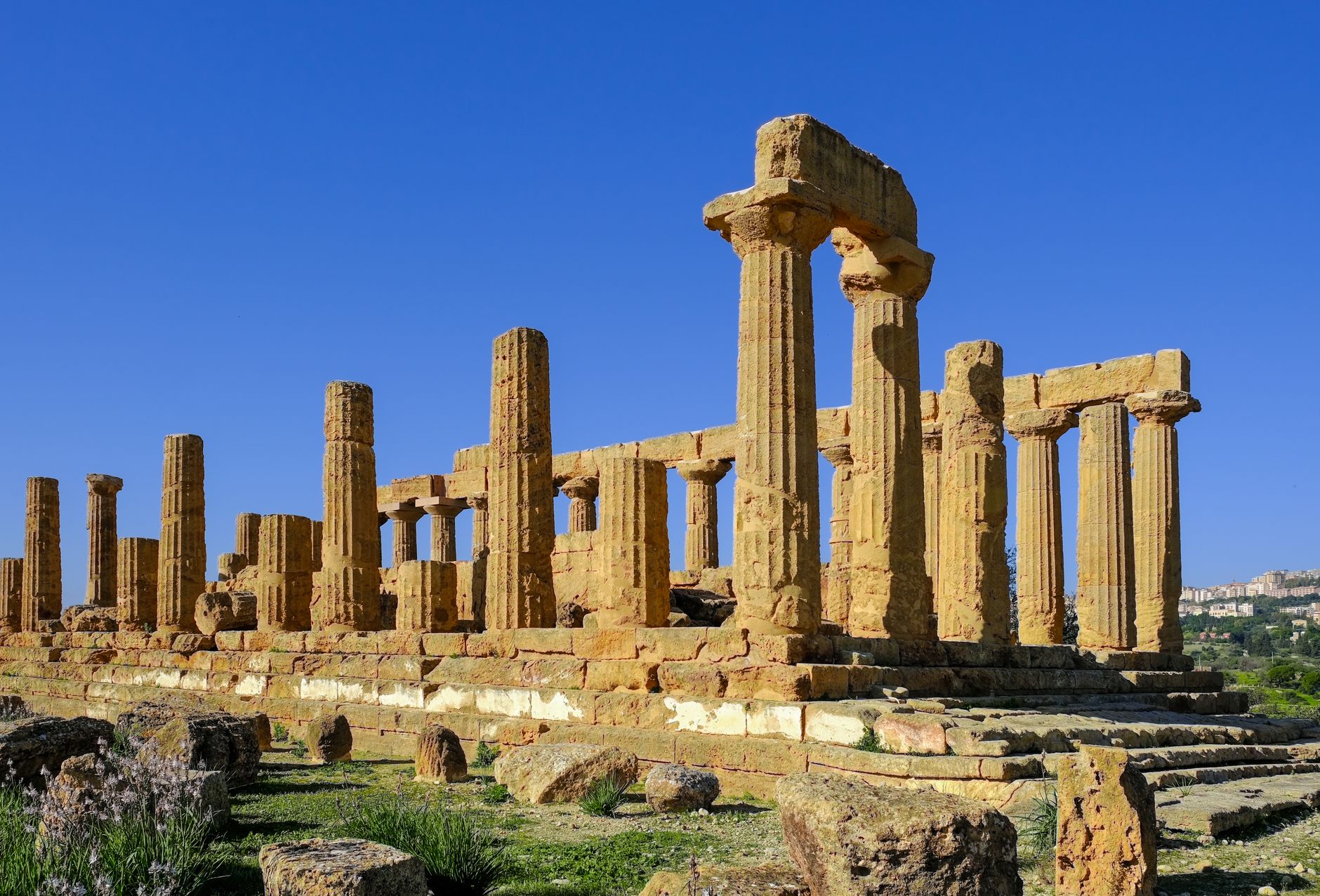
The actors are not imagining the temple behind them. It is right there, lit, and in the shot.
Do you need a giant LED stage?
Not always. The reconstructed environment is the real asset; it can be delivered for an LED volume, used for traditional compositing, or rendered as full cinematic shots if a physical stage is not in budget. We scope the delivery to your production, not the other way around, and we can collaborate remotely on the environment build regardless of where the shoot happens. We cover budgeting in reconstruction costs.
Planning a historical shoot? Let’s build the world you want to film in.
Frequently Asked Questions
What is virtual production for historical film?
It is filming actors in front of a large LED volume that displays a real-time reconstructed historical environment. The camera is tracked so perspective updates correctly, so scenes set in a vanished world are captured in camera with accurate lighting and reflections instead of green-screen guesswork.
Why is virtual production better than green screen for historical scenes?
The reconstructed world is visible during the shoot, so actors perform inside it and the environment’s light falls correctly on faces and costumes. It is more believable, faster to finish, and easier on performers than acting against an empty green screen.
Do you need an expensive LED stage to use a historical reconstruction?
No. The reconstructed environment is the core asset and can be used on an LED volume, for traditional compositing, or rendered as full cinematic shots if a physical stage isn’t in budget. The environment build itself can be produced remotely.