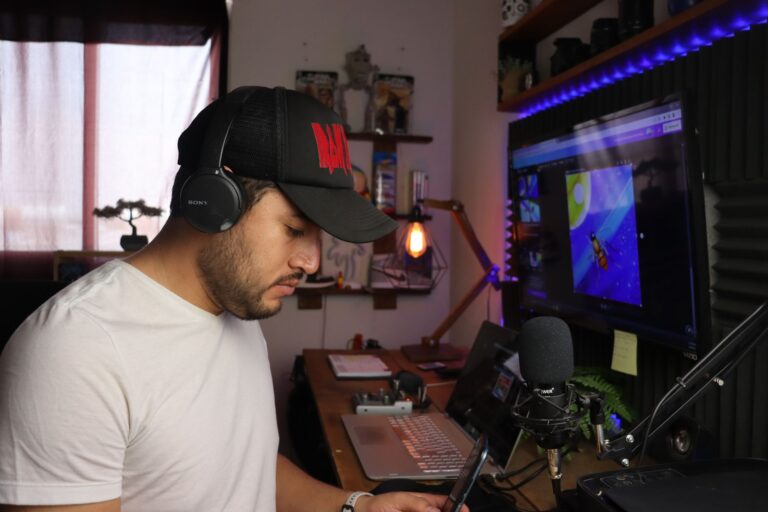

Fortnite Creative has been through a significant evolution. When Epic released UEFN — Unreal Editor for Fortnite — in 2023, it changed the ceiling on what map creators could actually build. Now in 2025, the question is whether the platform has matured enough to justify serious investment of time and skill. The short answer is yes, but with clear-eyed expectations about what “worth it” actually means.
What UEFN Actually Adds
Old Fortnite Creative was a prefab tool. You placed props, set up basic game logic with existing devices, and shipped a map that felt distinctly like a Fortnite map because everything in it came from Fortnite’s asset library. It had a hard ceiling. Anything that required custom behavior, custom visual design, or complex scripting hit a wall.
UEFN is a real editor. It runs on the same base as Unreal Engine 5, which means if you have experience with UE5 — materials, lighting, level design workflows, Blueprint logic — you are not starting from scratch. Verse, the scripting language built for UEFN, is a functional language with static typing. It is not the same as Blueprint visual scripting, but the underlying logic concepts transfer. You can build custom game modes, custom scoring systems, custom UI overlays, and import assets that did not exist in Fortnite’s native library.
The gap between what old Creative could produce and what UEFN can produce is significant. If you have built anything in UE5 before, UEFN will feel constrained in some ways — you are still operating within Fortnite’s runtime rules — but it will also feel immediately familiar in its layout, viewport navigation, and asset workflow.
How Map Creators Get Paid Now
Epic’s creator economy for UEFN is built around the Support-A-Creator code system and — more significantly — the Island Creator program, which distributes a share of Fortnite’s revenue pool based on engagement metrics for your map. Players spending time in your island earns you a portion of that pool.
The math is not always transparent and the pool is competitive. A map that gets moderate play will generate modest income. A map that breaks into genuine viral popularity — getting featured by Epic, spreading on TikTok, appearing in Fortnite’s in-game discovery feed — can generate meaningful revenue. The difference between those two outcomes is partly map quality and partly distribution luck.
Epic does offer editorial featuring for maps that meet certain quality thresholds. Getting featured in the Discover tab is a meaningful traffic event. It is not guaranteed by quality alone — there is a curation process and it is competitive — but it is a real path, and maps built with UEFN’s full toolset have a better shot at meeting the visual and gameplay bar Epic is looking for.
What Kinds of Maps Actually Get Played
The Fortnite Creative audience is large and its tastes are specific. Maps that perform consistently fall into recognizable patterns: deathrun obstacle courses, prop hunt variants, zone wars and box fight training maps, and tribute maps built around popular IPs or Fortnite seasons. These categories have built-in search traffic and player expectation.
Original game modes — things that do not fit an established template — have a much harder discovery problem. A genuinely creative experience that does not match any familiar search term will not surface in Fortnite’s discovery feed because players do not know to look for it. It takes external promotion, community seeding, or genuine luck to get traction on something that does not fit a known category.
This is a constraint worth understanding before you invest months in a wildly original project. The platform rewards familiarity. That does not mean original work is worthless — it means the distribution path for it requires more external effort.
The Skill Overlap With UE5 Is Real and Valuable
If you are working in Unreal Engine professionally or seriously as a hobbyist, time spent in UEFN is not isolated to Fortnite. You are reinforcing level design habits, practicing asset composition and lighting, and getting deeper with a scripting language that has a real engineering pedigree. Verse is not going to replace Blueprint or C++ in a commercial UE5 project, but the problem-solving pattern — thinking in terms of state, events, and data flow — transfers.
For someone coming from a UE5 background, UEFN is worth treating as a constrained creative exercise. The constraints are real: you cannot do everything you can do in a full UE5 project. But constraints produce focused design decisions. Building in UEFN has made me think harder about game loop clarity and player feedback because the tools force a tighter scope than a full engine project does.
I build Fortnite maps as part of the Sinfull Studios operation. The workflow overlaps with the professional Unreal Engine work enough that it is not a detour — it is practice with a built-in distribution platform attached to it.
Should You Learn UEFN If You Have a UE5 Background?
Yes, with a realistic frame around the goal. If your goal is to build a portfolio piece that demonstrates level design competency — yes, UEFN produces real work you can show. If your goal is to generate meaningful income quickly from map royalties — that is harder and less predictable. If your goal is to build an audience of Fortnite players who follow your creative work — that is achievable but requires streaming and community building alongside the map work, not just publishing and waiting.
The platform is not going away. Epic has put serious infrastructure behind UEFN and the creator economy programs. The toolset will continue to expand. Getting competent in it now, while the field of high-quality UEFN maps is still relatively small, is a reasonable bet.
The Honest Verdict
UEFN in 2025 is a legitimate creative platform with a real creator economy and a toolset that respects the skills of people who come from game development backgrounds. It is not a get-rich-quick publishing machine, and the most original ideas face real distribution challenges on a platform that rewards familiarity.
But if you enjoy map design, have Unreal Engine experience, and want a platform with a built-in player base numbering in the hundreds of millions — there is nowhere else that offers the same combination. The ceiling has risen considerably since old Creative. Whether you hit it depends on what you are trying to build and why.
I build maps. I stream the process at SinfullSlinn on Twitch. Come see what the work actually looks like from the inside.
Explore the Gaming and Streaming at SinfullSlinn at Sinfull Studios for more.
Related reading from Sinfull Studios
- Running a Minecraft Stream and Build Series as a Small Creator
- Minecraft Survival Base Design: Building for Efficiency, Not Just Looks
- ADHD-Friendly Streaming Systems: Why Messy Consistency Beats Perfect Plans
- Gaming and Streaming in Regina
Based in Regina, Saskatchewan. Explore Gaming and Streaming or request a quote from Sinfull Studios.