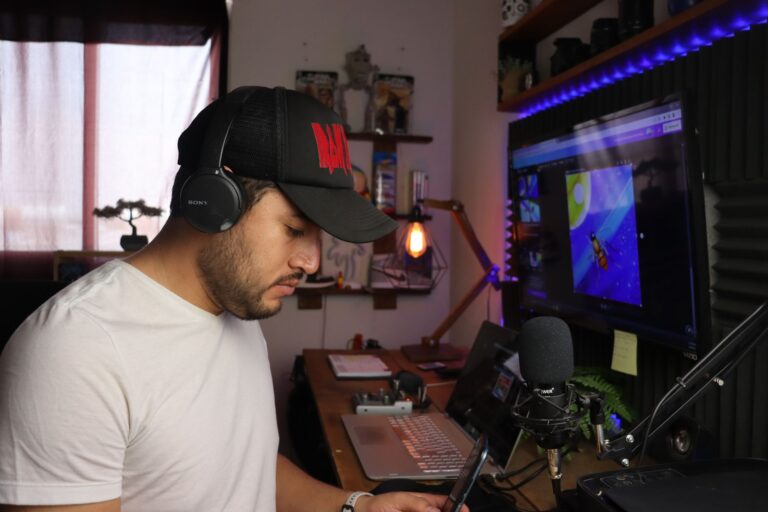
Sloth sounds like the wrong sin for a streaming pillar until you have actually tried to make content while your brain wants twelve different things at once. At Sinfull Studios, Sloth is not about doing nothing. It is about understanding that output does not always look neat from the inside. Some days the energy is wild, the ideas are everywhere, and the best thing you can do is capture the momentum before it disappears. Other days the system has to carry you because motivation is nowhere to be found.
That is the real side of gaming and streaming. People love the polished version where consistency looks effortless, the schedule is colour-coded, and every stream rolls into the next with machine precision. For a lot of creators, especially ADHD-brained ones, that version is fantasy. The goal is not perfect consistency. The goal is messy consistency that still works.
If you have spent any time in the SinfullSlinn gaming lane, you already know the mix: Minecraft, Fortnite, Project Zomboid, stream ideas, community experiments, and the constant pull between building something ambitious and actually finishing something this week. The trick is not becoming a robot. The trick is designing a system that still produces when the brain decides to wander.
Perfection kills more streams than inconsistency does
A lot of creators do not burn out because they streamed too much. They burn out because they designed a version of content creation that only works on their most organized day. That is not a schedule. That is a trap. If your streaming plan depends on perfect sleep, perfect focus, perfect mood, perfect prep, and zero life interruptions, it is already broken.
What tends to work better is a system with layers. On a high-energy day, maybe you stream longer, clip more moments, outline future ideas, and push a little harder. On a low-energy day, maybe the win is showing up, running one solid session, naming your VOD properly, and writing down one thing to improve next time. Both days count. The point is to stay in motion.
Build defaults, not heroic routines
Sloth works best when you reduce the number of decisions required before going live. Defaults matter more than motivation. If the overlay is ready, the game list is short, the alerts are already set, and you know what your fallback stream looks like, you are much more likely to hit the button.
- Pick a default game lane: Have one or two go-to games you can stream without a big mental warm-up.
- Use a simple pre-stream checklist: audio, scene check, title, category, water, go live.
- Keep backup stream ideas visible: if the main plan dies, you still have a usable second option.
- Clip and note fast: do not trust yourself to remember the good moment tomorrow.
- Treat rough streams as reps: not every session has to be a highlight reel to move the channel forward.
This is why messy consistency wins. A default can survive a bad day. A heroic routine usually cannot.
Minecraft and community building reward long-term systems
Minecraft is a good example because it naturally exposes the difference between hype and structure. A fresh server launch feels exciting. Everyone has plans. Everybody wants to build. The real question is what happens three weeks later when the novelty dips and the maintenance work begins. That is where systems matter.
Community-focused game content is rarely held together by giant peaks alone. It survives on repeatable habits: clear sessions, manageable goals, regular check-ins, and enough flexibility to pivot when the server decides to become the main character. If you are building around multiplayer or long-running worlds, the discipline is not about forcing big performances every time. It is about creating enough structure that people know the world is still alive when they come back.
That same logic applies whether the stream is built around a Minecraft world, a Fortnite experiment, or a survival run in Project Zomboid. The audience does not need you to be superhuman. They need you to keep the fire lit.
ADHD output is real output, even when it looks strange
One of the biggest mindset shifts for creators with scattered energy is realizing that uneven output is not fake output. Brainstorming counts. Testing counts. Setting up a better scene collection counts. Running one stream that teaches you what not to do counts. Not every part of the process looks public, but it still strengthens the work.
The danger is when internal chaos turns into external silence for too long. That is where a system helps. You do not need to finish every possible idea. You need a way to turn enough of them into visible work often enough that the channel keeps growing. Sloth, as a pillar, is about accepting that creative velocity can look weird from the outside while still being very real on the inside.
What “showing up” should mean
Showing up does not have to mean forcing a six-hour marathon every time you feel guilty. Most creators would benefit more from a realistic floor than an impressive ceiling. Maybe your floor is one live session, one note for the next one, and one clipped moment worth reusing. Maybe it is a shorter stream with tighter focus. Maybe it is using the stream to build momentum for the next piece of content instead of pretending every session must stand alone.
That is healthier, and it is usually better content too. Audiences can feel the difference between a creator who is present and a creator who is dragging themselves through a schedule they no longer believe in. A system built around manageable momentum helps keep the fun alive, which matters if you want the lane to last.
If you want to see where that energy goes on the site, start with the broader gaming and streaming hub or dig into the long-running game lanes from there. If you are building your own content system and want to talk collaboration, editing, or workflow, reach out. Sloth is not an excuse to disappear. It is a reminder to build a process that can survive the days when discipline has to do the carrying.
Related reading from Sinfull Studios
- Project Zomboid Build 42: How to Actually Survive the First Week (Without Getting Unlucky)
- Fortnite Creative and UEFN in 2025: Is It Still Worth Building Maps?
- Building Fortnite Creative Maps: What Makes a Map Worth Playing and How to Design for Player Experience
- Gaming and Streaming in Regina
Based in Regina, Saskatchewan. Explore Gaming and Streaming or request a quote from Sinfull Studios.