Thermal drone imaging in Regina lets commercial property owners, building managers, and solar operators see heat, moisture, and electrical faults that are invisible to a standard camera — and Sinfull Studios delivers radiometric thermal inspections across Regina and southern Saskatchewan as a Transport Canada RPAS-certified operator. A single flight can survey a large flat commercial roof, a solar array, or a building envelope in a fraction of the time required by ground-based methods, producing calibrated thermal data you can act on.
What Does a Thermal Drone Inspection Actually Deliver?
A radiometric thermal camera records real temperature values at every pixel — not just a colour image, but a data file you can interrogate later. From a commercial inspection flight, you receive radiometric TIFF files, annotated thermal reports identifying anomalies, and often a side-by-side RGB overlay so every flagged area can be located precisely. For roofing work, moisture maps are generated showing suspected wet insulation. For solar, individual panel hotspot reports identify underperforming cells or strings. For envelope inspections, heat-loss imagery shows where insulation is failing or air is infiltrating around windows, parapets, and mechanical penetrations.
Flat Commercial Roof Inspections: Finding Moisture Before It Becomes Structural Damage
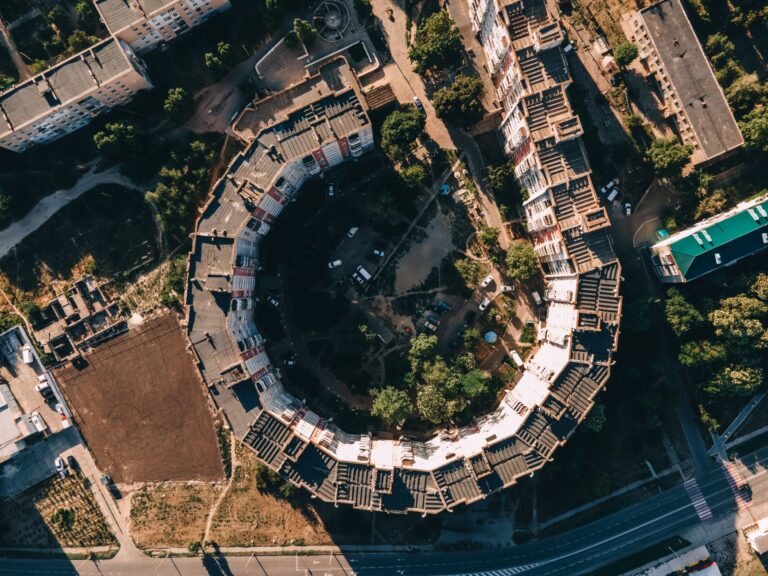
Prairie commercial buildings — warehouses, big-box retail, industrial facilities, multi-unit residential — rely heavily on flat or low-slope roofing systems. Once water breaches the membrane and saturates insulation, it migrates laterally and the damage spreads silently for years. Thermal imaging works because wet insulation retains daytime heat longer than dry insulation, creating a measurable temperature differential that shows up clearly in post-sunset or pre-dawn thermal scans. A drone covers thousands of square metres of rooftop in a single flight, producing a georeferenced moisture map that tells your roofing contractor exactly where to core-test and where the membrane needs attention. This is significantly faster and cheaper than a full core-sampling program across an unknown roof.
Solar Panel Inspections: Hotspot Detection and Performance Faults
Saskatchewan’s solar industry has expanded steadily as agricultural and commercial operators invest in on-site generation. Thermal drone surveys of solar arrays identify hotspots caused by cell degradation, bypass diode failure, shading mismatches, soiling, or delamination — all of which reduce output and, in severe cases, create fire risk. A drone covers a large ground-mount or rooftop array efficiently and flags individual panels or strings by GPS location, so maintenance crews go directly to the problem. Inspections should be conducted under full sun with the array generating power, typically between 10 a.m. and 2 p.m. on a clear day — conditions that maximize the temperature differential between healthy and underperforming cells.
Building Envelope and Heat-Loss Surveys
A winter envelope scan in Regina — where heating loads are significant and energy costs are real — can show exactly where a building is losing heat. Thermal imaging from a drone captures parapet edges, window frames, curtain wall joints, mechanical penetrations, and wall sections from angles and heights that are impractical for hand-held cameras. Facility managers use envelope reports to prioritize caulking, insulation upgrades, and air-sealing before the next heating season. These surveys are most effective when there is at least a 10-degree Celsius difference between interior and exterior temperatures — a condition Regina delivers reliably from October through April.
What Conditions Are Required for a Useful Thermal Inspection?
Thermal drone data quality depends heavily on timing and weather. General guidance for common inspection types:
- Roof moisture: 1-4 hours after sunset on a day with at least 6-8 hours of sun. Wind below roughly 15-20 km/h. No rain in the preceding 24 hours.
- Solar: Full sun, panels generating at peak output, mid-morning to early afternoon. Avoid overcast or partially cloudy days where irradiance fluctuates.
- Envelope/heat loss: Significant temperature differential between indoors and outdoors — typically fall, winter, or early spring in Saskatchewan. Low wind, no direct sun on the wall being imaged.
- Electrical/mechanical: Equipment under normal operating load; thermal contrast against ambient is what reveals anomalies.
Scheduling around these conditions is part of the job. I work with clients to choose a flight window that will produce usable data rather than booking a date that happens to be convenient but thermally unsuitable.
What Thermal Imaging Cannot Do
Thermal inspection is a diagnostic tool, not a definitive test. A thermal anomaly on a roof indicates a moisture suspect, not a confirmed wet spot — core sampling or capacitance testing is required to confirm. Hotspots on solar panels indicate reduced output or risk, but a detailed electrical assessment may be needed to determine root cause and repair scope. Envelope imaging shows thermal bridging and probable air leakage paths, but quantitative blower-door testing is a separate process. Sinfull Studios provides thermal data and annotated reports; the interpretation for structural or engineering decisions should involve the relevant trades or consultants. Honest framing of what the data shows — and what it doesn’t — is part of delivering a report worth paying for.
Transport Canada Compliance for Commercial Thermal Flights
Commercial drone operations in Canada require a valid Transport Canada RPAS operator certificate and registered aircraft. Many industrial and commercial sites in and around Regina fall within controlled airspace or near aerodromes, requiring airspace authorization before flight — a step that unregistered or recreational operators cannot legally perform. As a Transport Canada-certified operator, Sinfull Studios handles airspace authorization, site safety assessments, and documentation as standard practice. Clients receive a compliant operation, which matters for insurance, liability, and any regulatory review tied to the inspection report.
Who Uses Thermal Drone Inspections in Saskatchewan?
The clients most likely to get clear return from a thermal drone survey include:
- Property managers and building owners with large flat-roof commercial or industrial buildings
- Solar operators running ground-mount or rooftop arrays who want annual performance inspections
- Insurance adjusters and underwriters assessing roof condition or post-storm damage
- Facility managers planning capital maintenance budgets and wanting data before committing to full roof replacement
- Construction project owners doing pre-handover envelope verification on new commercial builds
- Agricultural operations with grain storage facilities where roof integrity is a significant asset-protection concern
If you manage a commercial property or operate infrastructure in southern Saskatchewan and want to understand what a thermal inspection would cover and cost, contact Sinfull Studios at 306-807-9848 or through the contact form to discuss your site.
Explore Drone and Aerial Imaging in Regina at Sinfull Studios for more.
Related reading from Sinfull Studios
- Drone Inspections for Insurance Claims in Regina: Faster, Safer Documentation
- Drone Services for Realtors in Regina: Aerials That Help Listings Sell
- Commercial Drone Services in Regina
- Drone and Aerial Imaging in Regina
Transport Canada certified commercial drone work in Regina and southern Saskatchewan. Explore Drone and Aerial Imaging or request a quote.
Frequently Asked Questions
How much does a thermal drone inspection cost for a commercial roof in Saskatchewan?
Pricing depends on roof size, site complexity, airspace requirements, and the reporting detail required. A straightforward flat-roof moisture survey on a single building is less involved than a multi-structure industrial site requiring airspace authorization. Sinfull Studios provides quotes based on your specific site — contact us with the property address and approximate roof area and we can give you a realistic range before you commit.
Can a thermal drone inspection replace a physical roof inspection or core sampling?
No — thermal imaging identifies anomalies and narrows the area of concern, but it does not replace physical verification. A thermal scan showing suspected moisture in a roofing assembly still requires core sampling or capacitance testing to confirm wet insulation. What it does is focus that physical investigation on the areas that actually need attention, which reduces the number of cores required and helps your roofing contractor prioritize repairs accurately.
Does the weather matter for a thermal drone roof inspection, and how far in advance do you need to schedule?
Weather is critical. Roof moisture surveys require several hours of solar loading followed by a calm, clear post-sunset window — rain in the preceding day, heavy cloud cover, or high wind all degrade results. For solar inspections, full sun and active generation are required. Sinfull Studios works around your schedule but reserves the right to reschedule if conditions on the day won’t produce usable data. For most projects, booking a week or two ahead with a weather-contingent flight window is the practical approach.