A virtual art department (VAD) is the team and toolchain responsible for building the digital environments, assets, and previz that drive virtual production — LED volume shoots, in-camera VFX (ICVFX), and real-time 3D-backed filmmaking. Standing up a VAD capability in a small studio means developing environment art, Unreal Engine technical skills, and an organized asset library, then proving that capability on real projects before scaling headcount or hardware. Sinfull Studios in Regina, Saskatchewan is building exactly this — deliberately targeting a niche that most prairie-region production companies have not yet touched.
What does a virtual art department actually do?
The VAD is the bridge between a production designer’s vision and what appears on the LED volume or in the composited frame. In practice that means building photorealistic 3D environments in Unreal Engine, managing asset pipelines from Megascans or custom-modeled geometry, setting up nDisplay configurations so the LED wall renders correctly in camera, and working closely with cinematographers on frustum alignment and genlock. On a larger production the VAD includes environment artists, tech artists, a virtual production supervisor, and a simulcam operator. In a small studio those roles collapse — one or two people carry all of them, which means the skill set has to be genuinely broad.
Which skills do you actually need to hire or learn first?
The honest answer is that environment art and Unreal Engine technical art are the load-bearing skills. Everything else follows. Specifically:
- Environment art — modelling, UV layout, material authoring in Unreal’s material editor, and efficient use of Megascans and Nanite geometry so scene complexity stays manageable.
- Lighting — understanding Lumen’s indirect lighting, sky atmosphere, HDRI backplates, and how real-time lighting interacts with physical camera settings on an LED shoot.
- Tech art / blueprints — scripting level logic, sequencer-driven camera moves, and nDisplay configuration for multi-node LED walls.
- Pipeline discipline — naming conventions, LOD strategy, World Partition for large environments, and version control (Perforce or Git LFS for large assets).
If you are hiring, a generalist environment artist who knows Unreal is more useful at this stage than a narrow specialist. If you are learning, prioritize Lumen lighting and Nanite workflows first — those are the skills clients and directors notice immediately on an LED volume.
What hardware does a small studio actually need?
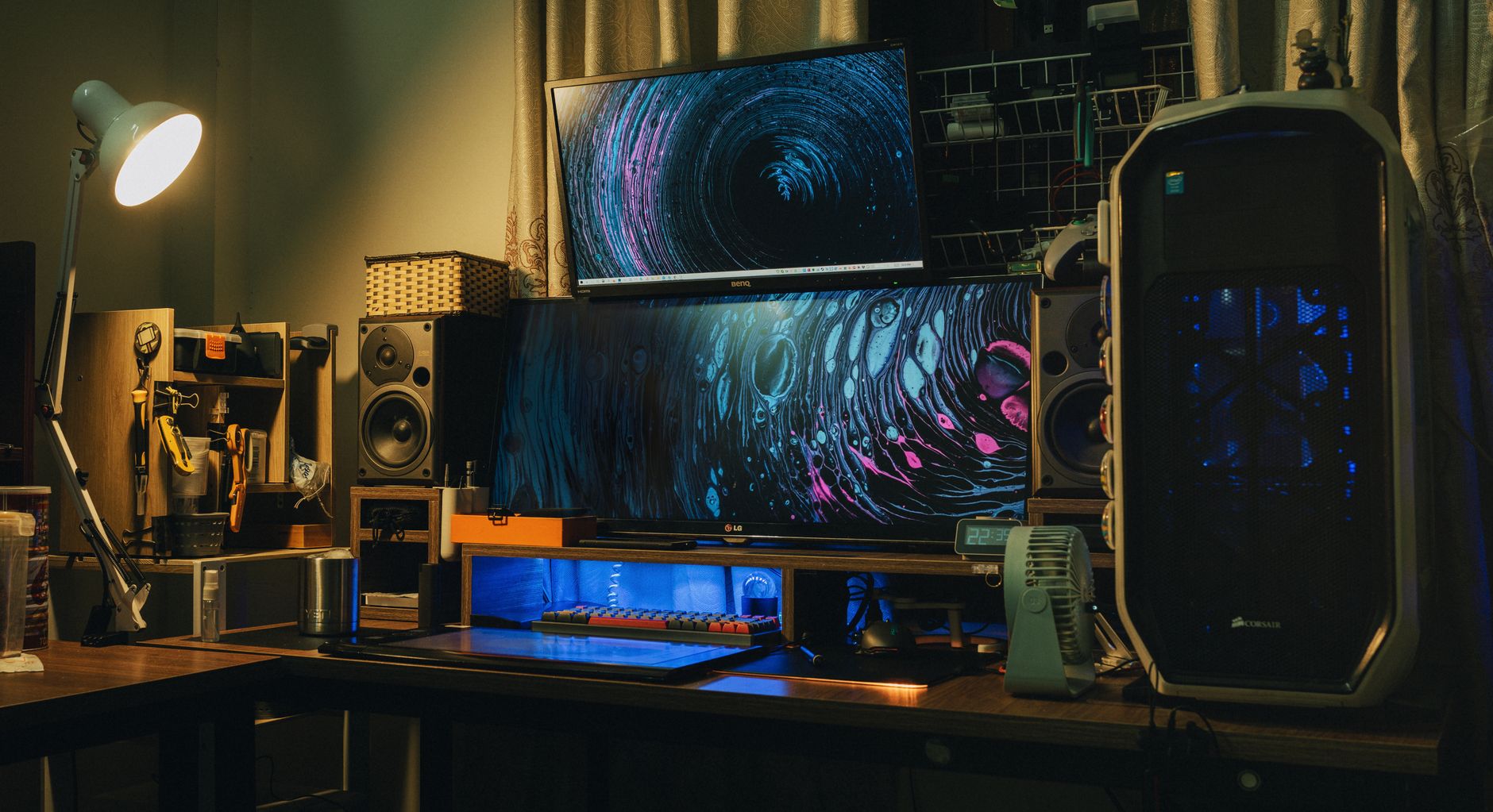
For Unreal Engine environment work and ICVFX previsualization, the minimum practical workstation is a high-end NVIDIA GPU — an RTX 4080 or better — with 64 GB of RAM and fast NVMe storage. Lumen and Nanite are GPU-bound; skimping on VRAM forces constant compromise on scene density. For an actual LED volume shoot you will need a render node cluster running nDisplay, but at the small-studio stage you are more likely serving as the VAD vendor for a production that owns or rents the LED stage. Your own hardware only needs to match the delivery spec for the digital environment, not drive the wall in real time on its own.
What is the right asset-library strategy from the start?
Build a library you actually own or have licensed correctly, organized by biome and use case. Megascans (via Fab) gives you photogrammetry-accurate surfaces and vegetation that are Nanite-ready out of the box. Beyond that, develop a set of reusable modular kits — architectural pieces, ground cover, atmospheric elements — so you are not rebuilding from zero on every project. Tag assets consistently, document material instances, and store master environments as Unreal project templates rather than loose asset folders. The time investment in organization pays back fast when a director asks for a revision two days before the shoot.
How do you start generating revenue before the capability is fully mature?
Serve real projects at whatever scale you can execute cleanly. That might mean providing a photorealistic Unreal environment for a commercial shoot using a green screen rather than an LED wall, building a previz environment for a director to share with clients, or delivering a game-ready scene for an indie developer. Each of those deliverables develops the same pipeline and the same Unreal craft as ICVFX work does — the difference is the final output format, not the core skill. Sinfull Studios has followed this path: doing the environment art and real-time 3D work that directly feeds virtual production, building the portfolio before chasing the biggest-budget LED volume jobs.
Why is the Regina/Saskatchewan market an opportunity right now?
Most VAD vendors are concentrated in Vancouver, Toronto, London, and Los Angeles. Prairie-region productions — commercials, agriculture and resource industry content, documentary, indie features — that want virtual production capability currently have to import it at significant cost or go without. There is no established local competitor for this niche in Saskatchewan, which means that being credible and present is itself a competitive advantage. That is a temporary window; it closes as the tools become more accessible and more generalists pick them up. The studios that build the track record now will own the reference work when the market expands.
What is the realistic timeline for standing up a working VAD?
Twelve to eighteen months of consistent project work gets a small team to a position where they can deliver a production-quality Unreal environment on a defined brief without major surprises. The milestones that matter are: first completed environment that holds up under a real camera (not just in-editor screenshots); first project where the asset pipeline ran without rework; first deliverable that a client or director used as a decision-making tool. Each one teaches something the tutorials do not. The goal is not to be Epic Games — it is to be the most capable VAD resource available to a producer in this region, at a price point that makes sense for the projects here.
How does VAD work connect to the broader virtual production pipeline?
Environment art and VAD work sit at the upstream end of the virtual production pipeline. The environments built in Unreal are the same assets used for previz, for simulcam tracking tests, and finally for the LED volume shoot itself — if the project scales to that. That means investing in VAD capability is not a separate track from virtual production; it is the prerequisite. Without production-quality digital environments there is nothing to put on the wall. Sinfull Studios treats environment art, VFX, and real-time 3D as a single integrated capability rather than separate service lines, because on a working production that is how they actually function.
Explore VFX, Game Dev and Virtual Production at Sinfull Studios for more.
Frequently Asked Questions
What is a virtual art department (VAD) in film production?
A virtual art department (VAD) is the team and toolchain responsible for building the photorealistic 3D environments and digital assets used in virtual production — including LED volume shoots and in-camera VFX (ICVFX). VAD artists work in real-time engines such as Unreal Engine to create environments that are rendered live on LED walls, used for previsualization, or composited into final frames. The VAD collaborates with the production designer, cinematographer, and virtual production supervisor to ensure digital environments match the lighting and camera conditions of the physical shoot.
What skills and software does a virtual art department require?
Core VAD skills include environment art (3D modelling, UV layout, material authoring), real-time lighting using tools like Unreal Engine’s Lumen system, technical art (blueprints, Sequencer, nDisplay configuration for LED walls), and pipeline management including Nanite geometry, World Partition for large scenes, and version control for large assets. Proficiency with asset libraries such as Megascans (available via Fab) and understanding of camera-matching techniques including frustum alignment and genlock are also essential for ICVFX work.
Can a small studio in Saskatchewan realistically offer virtual art department services?
Yes — a small studio can deliver genuine VAD capability by focusing on environment art and Unreal Engine technical skills, building a well-organized asset library, and proving the pipeline on real projects before pursuing large LED volume productions. The Saskatchewan and broader prairie-region market currently has very limited local VAD vendors, which means a credible regional studio such as Sinfull Studios in Regina can serve commercial, documentary, and indie productions that would otherwise need to import this capability from Vancouver or Toronto at significantly higher cost.
Related reading from Sinfull Studios
- What Is a Virtual Art Department (VAD)? Building Worlds Before the Shoot
- From Concept Art to Real-Time Asset: The Virtual Art Department Pipeline
- How a Virtual Art Department Works With the Production Designer
- Optimizing Assets for the Volume: Why VAD Work Differs From Game Art
Planning a virtual production, Unreal Engine, or VFX project in Regina or anywhere in Saskatchewan? Request a quote from Sinfull Studios.