A virtual art department (VAD) is the team and workflow responsible for building the digital environments, assets, and virtual scouts that support a production designer’s creative vision when shooting on an LED volume or using in-camera VFX (ICVFX). Rather than replacing the production designer, the VAD translates their physical and conceptual direction into a real-time 3D world — one that can be iterated, lit, and walked through before a single dollar is spent on a physical build. At Sinfull Studios in Regina, Saskatchewan, this is work we do using Unreal Engine, and it operates as a direct extension of the design conversation, not a separate technical silo.
What Does a Virtual Art Department Actually Do?
The VAD builds and maintains the real-time 3D environment that drives the LED volume. That means sourcing or creating assets (geometry, textures, lighting rigs), assembling them into a coherent world inside Unreal Engine, and ensuring that world renders correctly on the physical LED wall with proper parallax, color calibration, and frustum alignment. But the less-discussed part is the upstream collaboration — taking mood boards, set drawings, reference imagery, and the production designer’s spatial intent and turning all of that into something a director can literally walk inside during a virtual scout.
How Does the VAD Serve the Production Designer’s Vision?
The production designer owns the visual language of the film. The VAD’s job is to execute that language in a medium the designer may not work in directly. In practice, that means a constant translation loop: the designer specifies a color palette, a sense of scale, the quality of light at a particular time of day, or the texture of a specific surface — and the VAD artist builds it in Unreal, using tools like Megascans for photorealistic materials, Lumen for dynamic global illumination, and Nanite for high-density geometry that holds up under the camera. The designer reviews it, gives notes the same way they would on a physical set build, and the iteration continues. No one is being bypassed. The hierarchy is the same; the medium is different.
What Is a Virtual Scout and Why Does It Matter?
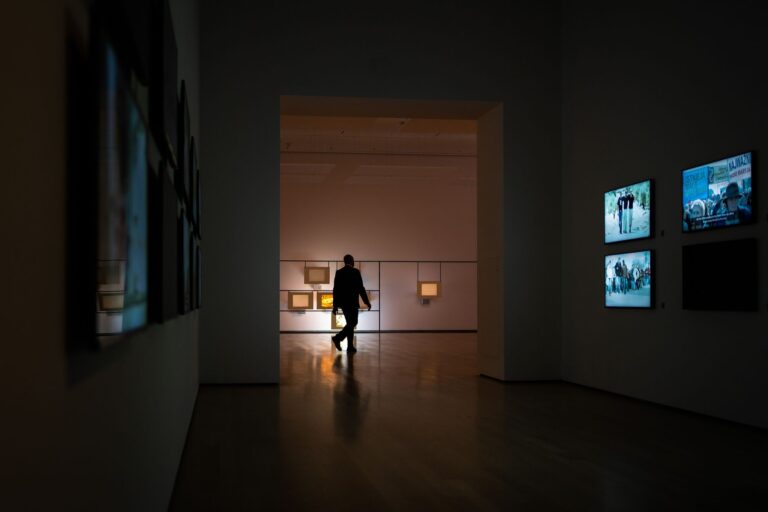
A virtual scout is a pre-production walkthrough of the digital set inside a VR headset or on screen, using the actual Unreal Engine scene that will be loaded on shoot day. It lets the director and DP block shots, test lens choices, and identify problems with sightlines or background content — all before the camera department arrives. For a producer, the value is straightforward: decisions that would cost hours on set get made in a review room. For the production designer, it is a chance to see their intentions at scale and correct them without rebuilding anything physical. At Sinfull Studios, virtual scouts are part of the standard pre-production process for volume work, not an add-on.
How Do Digital and Physical Sets Stay Consistent?
This is one of the harder problems in virtual production, and it requires tight communication between the VAD and the physical art department. If the physical set has a floor with a specific tile pattern or a practical wall section, that element needs to match — in color, texture, and scale — whatever is displayed on the LED wall. The VAD maintains a shared asset library and coordinates with the set decorator and construction coordinator so materials and finishes align. When changes happen on the physical side (and they always do), the digital set gets updated. The discipline that keeps this from breaking down is documentation and a clear chain of revision: every version of the digital environment is tracked, named, and approved before it goes on the volume.
What Communication Systems Make This Work?
The VAD sits at the intersection of the art department, the camera department, and the technical pipeline team (who handles nDisplay, server configuration, and genlock). That means the VAD supervisor needs to speak the language of all three. In practical terms, this looks like:
- Regular sync meetings with the production designer and art director during pre-production
- DP consultations on light color temperature, source direction, and exposure assumptions so Lumen renders match the physical lighting plan
- Technical reviews with the volume operator to confirm frustum settings, camera tracking calibration, and LED panel profiles are accounted for in the digital build
- A shared review platform (often SyncSketch or a simple frame-accurate export) so non-technical stakeholders can give visual notes without needing to open Unreal Engine
What Does the Director Actually See on Set?
On shoot day, the director sees the LED wall displaying the real-time Unreal Engine environment, tracked to the physical camera so that as the camera moves, the background parallax shifts correctly — this is in-camera VFX (ICVFX) as it is actually practiced. A simulcam feed lets the director see a composite of the live action and the digital environment in the monitor. The VAD is responsible for the environment being exactly what was approved in the virtual scout — same assets, same lighting setup, same version. Any deviation between what the designer approved and what is on the wall on shoot day is a VAD failure. That accountability is what defines the role.
What Should Producers and Designers Evaluate Before Hiring a VAD?
Ask to see previous environments built in Unreal Engine, not just renders — the real-time performance matters as much as the visual quality. Confirm that the team understands nDisplay and can configure it for your specific volume setup, and that they have a documented revision and approval process. Check whether they have experience working directly with a production designer, not just with a technical pipeline. The VAD that will serve your project well is the one that starts every conversation by asking what the designer is trying to say, then figures out how to say it in real-time 3D. Sinfull Studios approaches this work from the creative side first — the technical execution follows the vision, not the other way around.
Explore Film and Stage Credits at Sinfull Studios for more.
Frequently Asked Questions
What is a virtual art department (VAD) in film production?
A virtual art department (VAD) is the team responsible for building and managing the real-time 3D digital environments used in LED volume and in-camera VFX (ICVFX) productions. Working inside Unreal Engine, the VAD translates the production designer’s creative vision into a virtual set that can be iterated during pre-production virtual scouts and rendered live on the LED wall on shoot day.
How does a virtual art department collaborate with the production designer?
The VAD works as an extension of the production designer’s department, not a replacement for it. The designer sets the visual direction — palette, scale, lighting quality, surface textures — and the VAD executes that direction in Unreal Engine using tools like Megascans, Lumen, and Nanite. The designer reviews and gives notes on the digital build the same way they would on a physical set, maintaining the same creative hierarchy throughout production.
What is a virtual scout in virtual production?
A virtual scout is a pre-production walkthrough of the digital set built in Unreal Engine, viewed in VR or on screen. It allows the director, DP, and production designer to block shots, test lenses, and evaluate the environment before the shoot, resolving creative and logistical problems that would otherwise cost time and money on set day.
Related reading from Sinfull Studios
- What Is a Virtual Art Department (VAD)? Building Worlds Before the Shoot
- From Concept Art to Real-Time Asset: The Virtual Art Department Pipeline
- Optimizing Assets for the Volume: Why VAD Work Differs From Game Art
- Building a Virtual Art Department Capability in a Small Studio
Planning a virtual production, Unreal Engine, or VFX project in Regina or anywhere in Saskatchewan? Request a quote from Sinfull Studios.