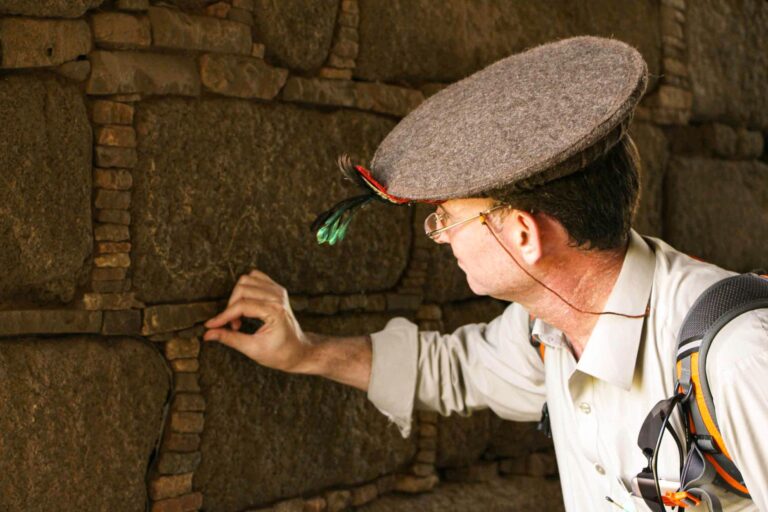

Megascans, developed by Quixel and now integrated directly into Unreal Engine, is a library of photogrammetry-scanned real-world surfaces, rocks, vegetation, debris, and props — each calibrated to physically-based rendering standards. When used correctly, these assets allow environment artists and virtual production teams to build photoreal digital sets in days rather than weeks. At Sinfull Studios in Regina, Saskatchewan, Megascans is a core part of how we build LED volume environments and real-time 3D backdrops that hold up under camera scrutiny.
What Is the Quixel Megascans Library?
Megascans is a photogrammetry-based asset library where every surface and object has been physically scanned at high resolution, then processed into albedo, normal, roughness, and displacement maps that all share consistent calibration. That calibration is the key differentiator — because every asset was scanned under the same controlled lighting conditions and processed through the same pipeline, a rock from Iceland sits next to a mud surface from Iceland and they read as belonging to the same world. The integration into Unreal Engine 5 via the Quixel Bridge plugin means you can drag assets directly into your scene without format conversion or re-texturing. Nanite, Unreal’s virtualized geometry system, handles the polygon complexity at render time, so you can use full-resolution scan meshes without manually building LODs.
How Do You Avoid the “Asset-Flip” Look?
The fastest way to make a Megascans environment look cheap is to drop assets into a scene without thinking about composition, scale variation, or layering. If every rock is the same size, every surface tile repeats at the same frequency, and no bespoke geometry ties the assets together, the result reads as a library dump — recognizable to anyone who has spent time in Unreal. The craft that still matters is the same craft that has always mattered in environment art and production design: read direction, grounding, story. Specifically:
- Break repetition by varying scale, rotation, and grouping — scan assets are rotationally symmetrical only in the library; use that freedom aggressively.
- Layer surfaces using Unreal’s Material Blend layers or Megascans surface materials stacked with vertex painting to add dirt, wetness, and edge wear transitions that no single scan provides.
- Use hero geometry for the foreground — custom or semi-custom meshes for the pieces the camera will read closely, with Megascans filling mid and background efficiently.
- Control your lighting. Megascans surfaces are calibrated for PBR, but Lumen’s global illumination response is what sells the final image. Incorrect sky light or poorly placed fill lights will undermine physically accurate materials immediately.
What Is Quixel Bridge and How Does the Workflow Actually Run?
Quixel Bridge is the desktop application and in-editor plugin that manages your Megascans downloads and imports. Inside Unreal Engine 5, Bridge runs as a panel, letting you browse the full library, filter by category and biome, and export directly into your project’s content folder with correct material instances already assigned. Exported assets arrive as Nanite-enabled static meshes by default. For surface materials used in landscape painting or decal layers, Bridge exports the texture maps and creates the material instances automatically. The practical workflow is: block your scene with simple BSP or placeholder geometry, identify the surfaces and hero props you need, pull them from Bridge, and begin dressing — treating the scene the same way a set decorator approaches a physical stage.
How Does Nanite Change the Performance Equation for Scanned Assets?
Before Nanite, using photogrammetry-quality meshes in a real-time scene required significant manual retopology and LOD chains — work that could consume as much time as the scene dressing itself. Nanite virtualizes geometry at the GPU level, streaming only the triangles and detail visible at the current pixel density. For scanned assets this is transformative: you can use the full-resolution Megascans mesh and let Nanite handle the optimization at runtime. There are limits worth knowing — Nanite has restrictions around certain translucent materials, masked geometry like foliage cards, and deformable meshes. For vegetation in particular you will still manage instanced foliage with standard LODs or use Nanite-compatible foliage settings introduced in later UE5 releases. For surfaces, rocks, architectural elements, and debris, Nanite works cleanly and the performance gains are real.
When Should You Blend Megascans with Bespoke Geometry?
The answer is almost always: in the foreground, and anywhere the production designer or director has a specific visual intent that the library cannot serve. Megascans is a general-purpose library — it is excellent at natural environments, weathered surfaces, and organic materials, but it cannot give you a specific fictional building facade, a custom vehicle wreck with story-specific damage, or an alien terrain that departs from real-world reference. Bespoke modeling in those cases is not a workaround; it is the correct use of the pipeline. The practical approach is to model hero pieces to camera, use Megascans textures and surface materials on those custom meshes for visual consistency, and let the library handle the environmental fill. This is how we build LED volume environments at Sinfull Studios — the background plate needs density and photorealism, but the specific elements that anchor the story require custom work.
How Do Custom Materials Work with Megascans Surfaces?
Megascans assets arrive as material instances — pre-configured instances of master materials that expose parameters for tiling, roughness adjustment, normal intensity, and so on. For simple environments this is sufficient. For hero surfaces or complex environments you will typically build or modify master materials that support multi-layer blending, allowing you to drive surface variation through vertex color, world position, or procedural noise. Megascans surface scans serve as individual layers in these blended materials rather than standalone tiling textures. This approach lets you create surfaces that feel specific — a concrete slab that accumulates moss in the low points, gravel that grades into mud at a shoreline — without repainting unique texture sheets for every asset. Understanding Unreal’s Material Editor at this level is where the library becomes a real production tool rather than a drag-and-drop shortcut.
Is This Workflow Practical for Virtual Production and LED Volume Work?
Yes, with caveats around frame rate requirements. LED volume work using in-camera VFX (ICVFX) demands that the Unreal scene render at camera frame rate — typically 24fps or higher — with additional headroom for the frustum (the camera-tracked inner panel region) running at maximum visual quality. Megascans assets with Nanite reduce the per-asset optimization burden significantly, which frees artist time for scene lighting and shader complexity. The real performance budget in ICVFX environments tends to be consumed by Lumen global illumination quality settings, reflection captures, and particle density — not polygon count. For virtual production environments built for an LED stage, Megascans is genuinely practical. For game development or film pre-visualization, the same pipeline applies with fewer real-time constraints.
Explore Environment Art in Unreal Engine at Sinfull Studios for more.
Frequently Asked Questions
What is Megascans and how does it work in Unreal Engine 5?
Megascans is a photogrammetry-based asset library developed by Quixel, now integrated into Unreal Engine 5 via the Quixel Bridge plugin. Every asset — surfaces, rocks, vegetation, props — is physically scanned under controlled conditions and calibrated for physically-based rendering (PBR). In UE5, Megascans assets import as Nanite-enabled static meshes with material instances pre-assigned, allowing environment artists to build photoreal scenes without manual retopology or LOD chain creation.
How do you avoid a Megascans scene looking like an asset flip?
The asset-flip look comes from using library assets without compositional intent — uniform scale, repeating surfaces, no layering or grounding geometry. Avoiding it requires varying asset scale and rotation deliberately, blending surface materials with vertex painting to add contextual wear and wetness transitions, building custom hero geometry for foreground elements, and treating scene lighting with the same care as a physical set. Megascans provides the raw material; the craft of environment art and production design still determines the final read.
Can Megascans assets be used in real-time LED volume and ICVFX environments?
Yes. Megascans assets with Nanite are well-suited to LED volume and in-camera VFX (ICVFX) environments in Unreal Engine because Nanite handles geometry complexity at the GPU level, reducing the per-asset optimization burden. The real-time performance budget in ICVFX work is more typically consumed by Lumen global illumination quality, reflection captures, and particle systems than by polygon count. Studios building LED volume backdrops — including virtual production work in markets like Regina, Saskatchewan — use Megascans as a primary library for environmental fill while reserving custom modeling for story-specific foreground elements.
Related reading from Sinfull Studios
- Designing Real-Time Environments in Unreal Engine 5: A Workflow Overview
- World Partition in UE5: Managing Large Environments Without Killing Performance
- Lighting an Unreal Environment with Lumen: Mood, Realism, and Control
- Set Extensions and Digital Backlots: Unreal Environments for Film
Planning a virtual production, Unreal Engine, or VFX project in Regina or anywhere in Saskatchewan? Request a quote from Sinfull Studios.