Small Unreal teams lose a lot of time by turning asset creation into an identity argument. One person wants to scan everything because photogrammetry captures believable detail fast. Another wants to hand model everything because scanned assets can become messy, heavy, and annoying to art direct. Both instincts can be right. The problem starts when the team chooses a side before it defines what the environment actually needs to do.
That is where greed becomes useful. A greedy pipeline wants more than surface beauty. It wants speed, editability, clean integration, predictable performance, and assets that keep working when layout, lighting, or camera priorities shift. If you are building Unreal scenes for games, previs, virtual production, or hybrid cinematic work, the better question is not which method is superior. The better question is which method makes this specific environment easier to finish well.
The broader VFX and game-dev pipeline work on the site follows that rule constantly. Tools are only valuable if they hold up under revision. The same applies to photoscanning and photogrammetry. Scans can be a huge advantage, but only when the team understands where they create leverage and where they quietly create cleanup debt.
What Photogrammetry Is Actually Good At
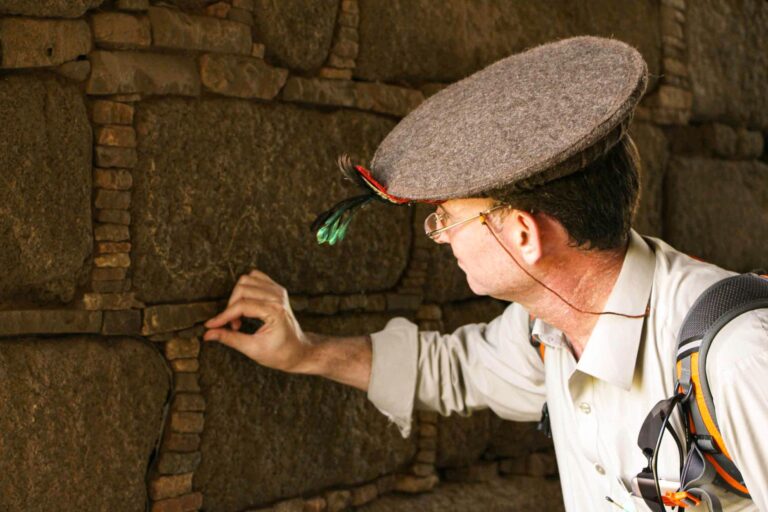
Photogrammetry shines when you need reality fast. It is excellent for rock surfaces, broken concrete, bark, ground breakup, debris clusters, weathered props, and natural material complexity that would take too long to sculpt from scratch. For small teams, that speed can matter a lot. A decent scan can establish believable micro detail, roughness variation, and material history in hours instead of days.
Scans are especially helpful when the environment needs to feel grounded in real-world wear. If your scene depends on convincing surface breakup, chipped edges, dirt accumulation, or non-repeating natural forms, a scan often gives you a richer starting point than hand modeling. A real object carries truth in its damage patterns and proportions, which helps keep a scene from looking too clean or too evenly designed.
For teams building realistic worlds, scans can also accelerate look development. You are not inventing every surface response from zero. You are starting from something the eye already believes, which leaves more art time for composition, mood, and staging.
Where Photogrammetry Starts Charging Interest
The downside is that scans rarely arrive production-ready. They often need cleanup, retopology, color correction, roughness balancing, decimation, seam work, pivot correction, collision setup, and material consistency passes before they behave properly inside Unreal. What looked fast on capture day can become slow in assembly week.
That cost gets worse if the team scans assets without a clear placement plan. Suddenly you have ten beautiful rocks that do not share scale logic, material response, or modular value. You also risk filling the project with assets that look realistic in isolation but do not harmonize once lighting and grading unify the scene. Scans can import real-world truth, but they also import real-world mess.
This is why planning still matters. The same warning shows up in small-team previs and environment blockout work: solve the structural questions early, or the pretty assets start defending bad decisions. A scan is not a shortcut around layout, scope, or art direction.
What Hand Modeling Still Does Better
Hand modeling wins whenever control matters more than captured complexity. It is better for hero shapes, modular kits, architecture, trim workflows, repeatable props, gameplay-critical readability, stylized worlds, and assets that will probably change direction mid-production. A hand-modeled piece is easier to simplify, re-proportion, reuse, and optimize because it was built around intent instead of captured conditions.
That control matters more than many small teams admit. Unreal environments are not just still images. They have to support movement, lighting variation, collision, streaming budgets, camera changes, and sometimes gameplay readability at the same time. If an asset needs to snap cleanly into a kit or survive multiple revisions, hand modeling usually gives you less friction.
It is also the safer choice when the art direction is still evolving. A hand-modeled asset can shift from realistic to pushed, from clean to distressed, or from neutral to story-specific without fighting its own source material. Scans sometimes resist that. They arrive with strong baked-in character, and if that character is wrong for the final scene, you spend energy undoing the exact realism you captured.
A Practical Decision Filter For Small Teams
- Use photogrammetry when: the asset benefits from real-world surface noise, irregularity, and believable damage, and you can afford cleanup.
- Use hand modeling when: the asset needs modular logic, exact proportions, strong art direction control, or likely revision flexibility.
- Prefer scans for: terrain breakup, rocks, rubble, natural materials, grounded set dressing, and secondary realism support.
- Prefer hand modeling for: architecture, hero props, repeated structures, traversal-critical objects, and anything tied to gameplay readability.
- Pause before scanning if: the blockout is unstable, the scene style is still shifting, or nobody has budgeted cleanup time.
- Pause before hand modeling if: you are spending days inventing believable damage that a well-shot scan could have given you in one pass.
The Best Small-Team Answer Is Usually Hybrid
The strongest Unreal environment pipelines usually combine both methods. Scan what gives you reality efficiently. Hand build what needs control. Use photogrammetry to supply texture truth, secondary breakup, and organic variation. Use hand modeling to establish composition, modular systems, hero forms, and gameplay-safe readability.
That hybrid approach also keeps the team from overcommitting to either cleanup debt or sterile precision. A scene can get its grounded realism from a few smart scans while still staying editable because the load-bearing structures were built by hand. That is a much healthier balance for small teams than trying to force every asset through the same philosophy.
It also helps with optimization. You do not need every object to carry scan density. Sometimes the better move is a hand-built low-cost form with scanned material influence, or a scanned asset that gets simplified and reused only where its complexity actually earns screen time. Greed in production is not about collecting methods. It is about squeezing more usefulness out of each one.
The Real Question Is What You Need The Asset To Survive
Before choosing a workflow, ask what the asset has to survive. Does it need to handle repeated reuse across a kit? Does it need to accept fast art direction changes? Does it need to look good from inches away in a cinematic? Does it need to stay cheap enough for real-time play? Does it need to match a very specific real-world source? Those answers usually make the decision clearer than ideology does.
Small teams get the best results when they stop chasing purity and start chasing durability. Photogrammetry and hand modeling are both useful. The winning move is choosing the one that gives the scene the most strength with the least downstream friction. If you need a pipeline that can blend scanning, Unreal environment work, and practical production constraints, explore the service lane, look through the photoscanning work, and reach out when you want the asset strategy to support the whole project instead of just the first exciting pass.
Related reading from Sinfull Studios
- Environment Art in Unreal Engine 5 for Small Teams
- Photogrammetry for Game Devs: Scanning Real-World Objects Into Unreal Engine
- NPC AI: Behavior Trees vs Utility AI and When to Use Each
- VFX, Game Dev and Virtual Production in Regina
Based in Regina, Saskatchewan. Explore VFX, Game Dev and Virtual Production or request a quote from Sinfull Studios.