The Project
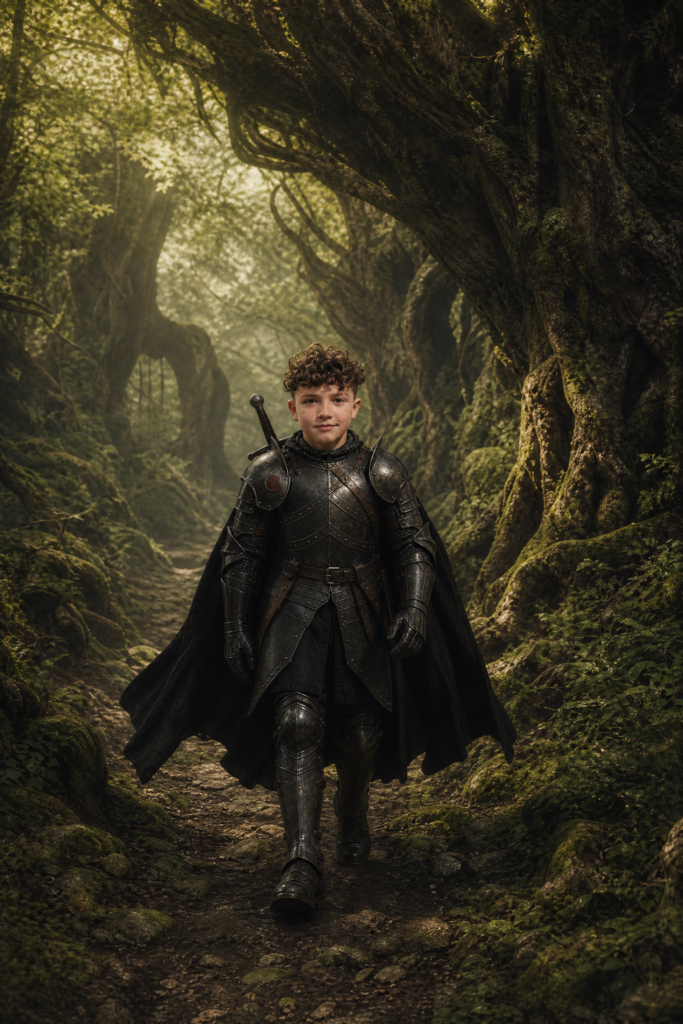
This character series was built as a virtual production showcase — a single subject placed across multiple distinct environments using a combination of photographic reference, AI-assisted image synthesis, and virtual production lighting logic. The goal was to test how far a consistent character could be pushed across different scene contexts while maintaining visual believability in each one.
Three Environments, One Character
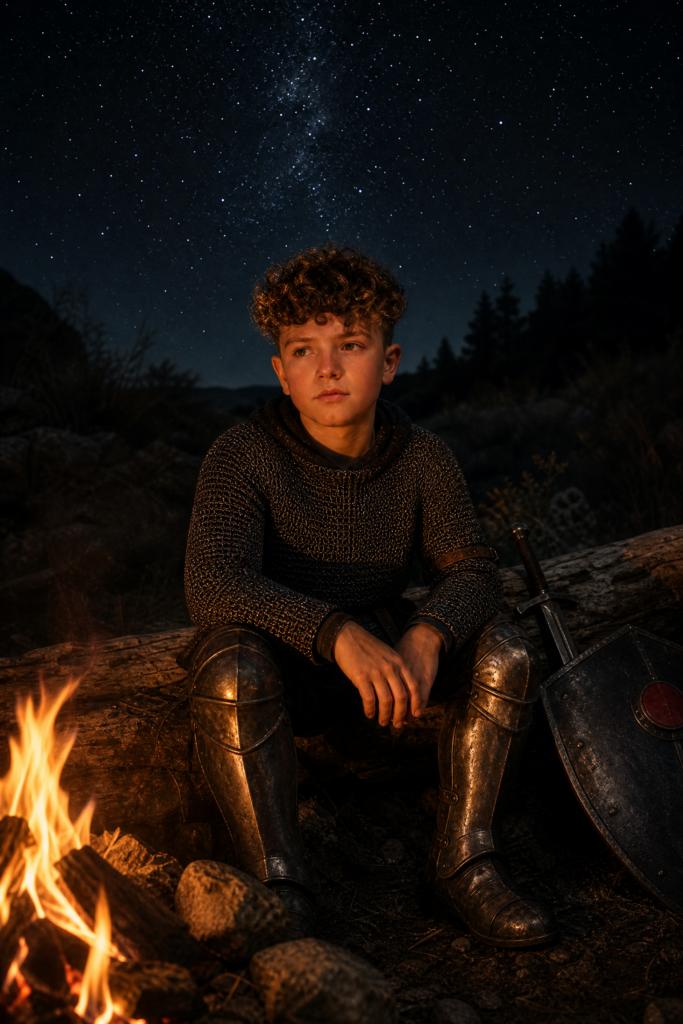
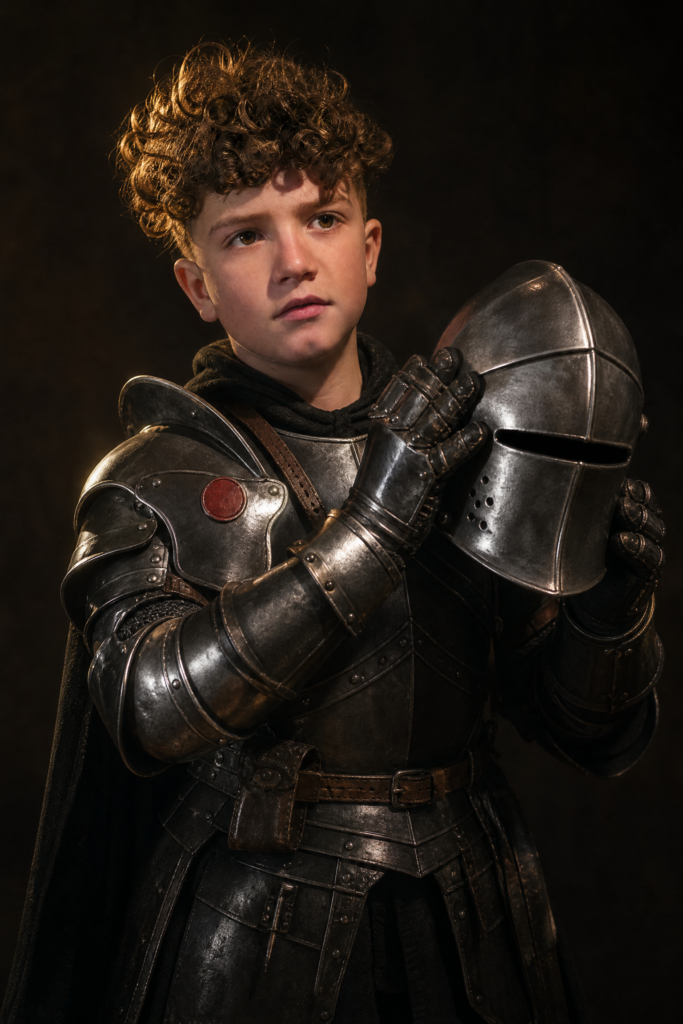
The character — a young medieval knight — was rendered across three very different environment types: a low-light campfire scene under a night sky, a daylight forest interior with ambient bounce light, and a controlled studio portrait with directional key lighting. Each environment required different lighting logic to read as real. The campfire scene is driven by warm, flickering practicals against a cold ambient fill from the sky. The forest version uses soft, diffused overhead light with green bounce from the foliage. The portrait is a classic three-point setup translated into a period-accurate Renaissance style.
Why Lighting Consistency Matters in Virtual Production
The most common reason a virtual production composite fails is lighting mismatch — the subject and the environment are lit from different angles, or the color temperature of the light does not match the scene. When it is right, the viewer does not notice the seam. When it is wrong, the image reads as fake immediately even if they cannot articulate why. Getting this right is not a software problem, it is a cinematography problem. The tools generate what you tell them to. The judgment about what a scene should look like comes from understanding how light actually behaves.
The Pipeline
Virtual production work at this level combines photography, 3D environment reference, and AI-assisted image synthesis into a single output pipeline. The character reference establishes the subject — their features, proportions, and the specific quality of the light falling on them. The environment is built separately, then the two are composited with attention to shadow direction, ambient occlusion, and atmospheric depth. The portrait variant goes through a different path — the environment is minimal and the emphasis is entirely on controlled, dramatic lighting that echoes Renaissance oil painting conventions.
Applications
This kind of pipeline is directly applicable to film and television pre-visualization, game concept art, character-driven advertising, and interactive media. For productions that need to visualize characters in environments before committing to a full physical shoot, virtual production compositing provides fast, high-quality reference that art directors and directors can actually make decisions from. It also produces finals — some of these frames are closer to deliverable quality than scratch pre-viz.
Explore VFX, Game Dev, and Virtual Production at Sinfull Studios for more.
Related reading from Sinfull Studios
- Lighting an Unreal Environment with Lumen: Mood, Realism, and Control
- Narrative Design in Games: Telling Story Through Systems, Not Just Cutscenes
- Virtual Scouting in Unreal Engine: Walking a Set Before You Build It
- VFX, Game Dev and Virtual Production in Regina
Based in Regina, Saskatchewan. Explore VFX, Game Dev and Virtual Production or request a quote from Sinfull Studios.