Most of virtual production can be handled remotely — and Sinfull Studios builds Unreal Engine environments, previs assets, and in-camera VFX content for productions worldwide without ever setting foot on a volume. If your production is planning an LED wall shoot, a virtual scout, or any real-time pipeline work, a remote VP partner can take on the bulk of the technical and creative content prep, freeing your on-set team to focus on what actually requires a physical presence.
What Is Virtual Production Content, and Why Does Location Not Matter?
Virtual production — specifically LED volume work and in-camera VFX — depends on having correctly built, lit, and optimized Unreal Engine environments loaded onto the volume before cameras roll. That asset creation pipeline is entirely digital. The files get built on a workstation, reviewed over video call, approved over a shared drive or Aspera link, and delivered as Unreal project packages or rendered plates. Where the artist sits is irrelevant. What matters is whether the environments render at volume framerates, whether the perspective matches your lens data, and whether the lighting integrates with your physical set extension. Those are craft and technical problems, not geography problems.
What Can You Actually Outsource to a Remote VP Partner?
Here is where a remote studio like Sinfull can genuinely carry the load:
- Unreal environment builds for LED volumes — full scene construction using Nanite geometry and Lumen global illumination, optimized for real-time playback at volume resolution and framerate requirements.
- Virtual scouting assets — navigable Unreal levels built from reference, concept art, or location scans so your director and DP can walk the space in VR or on a monitor before a single crew member travels anywhere.
- Previs and techvis — blocking out camera moves, lighting setups, and stunt geometry in real-time so your on-set team arrives with a plan, not questions.
- In-camera VFX content prep — dressing environments, calibrating color temperature and exposure to match your physical set, and preparing scene variants for different takes or lighting states.
- Motion graphics and animated content for screens and displays — anything appearing on in-scene monitors, signage, or background screens inside an Unreal environment.
- VFX compositing and plate work — for hybrid shoots that mix volume footage with traditional green-screen elements, roto, and matchmove, the comp work is fully remote by nature.
What Actually Requires Someone On-Set?
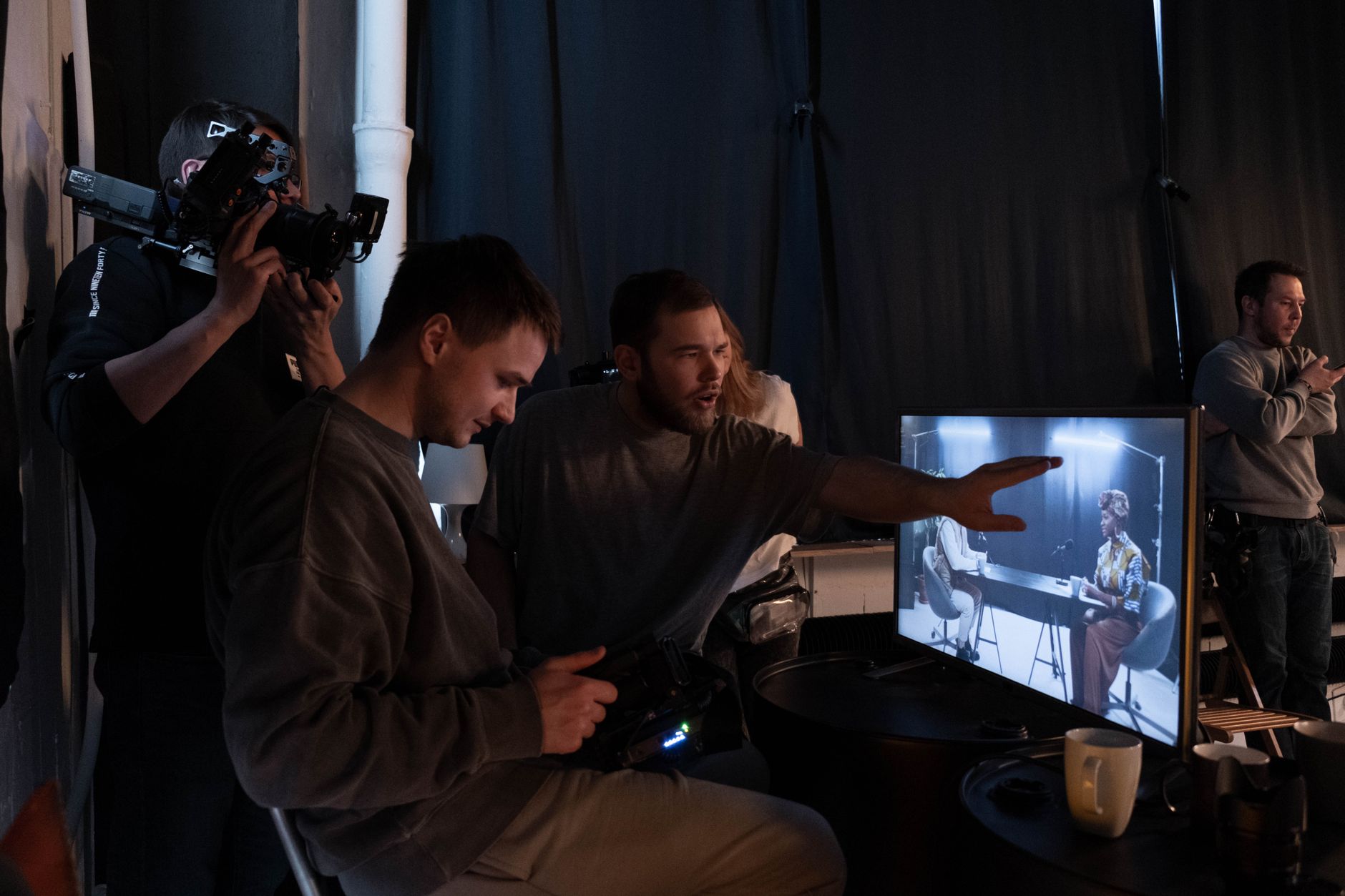
Honest answer: the volume operator, the Unreal technician running the show on shoot day, and whoever is troubleshooting real-time performance issues live on set need to be physically present. Camera tracking calibration, color calibration against the physical wall, and any real-time manipulation tied to live camera data require hands in the room. If your production already has a volume vendor or in-house tech team handling the day-of operation, a remote studio slots in cleanly upstream — we build and deliver the content they run.
How Does the Remote Collaboration Actually Work?
The workflow is straightforward and matches how VFX houses have worked with productions for decades. You send us your creative brief, reference, lens specs, and any existing assets — scout photos, concept art, lidar scans, or CAD data if it exists. We build in iterations: a rough blockout for spatial approval, a lit pass for mood and tone, a final optimized build ready for volume loading. Review happens over frame.io, Google Meet, or whatever your production uses. Deliverables are packaged Unreal projects, or — if you need rendered plates rather than real-time — EXR sequences in whatever colorspace your DI pipeline expects. We operate on North American timezones, which means real overlap with U.S., Canadian, and European productions, and workable async with Asia-Pacific and Australian shoots.
Can a Remote Partner Help If We Are Still in Early Development?
Yes — and that is often the highest-value entry point. Productions that bring in a VP partner at script breakdown or pre-production can use virtual scouting assets to make location decisions without travel, use previs to lock camera plans before volume booking, and use proof-of-concept renders to sell the look to a network or financier. We built the Medicine Women teaser exactly this way — an in-house Unreal pipeline used to prototype a look and establish the production’s visual language before a full shoot. That kind of work is entirely remote and can be done for productions at any scale, anywhere in the world.
What Does It Cost and How Is Scope Defined?
VP content work is scoped by environment complexity, asset count, and revision rounds — not by the size of your volume or your location. A single hero environment with two or three lighting states is a defined deliverable. A full series of modular environments with multiple scene variants is a larger engagement. We scope based on your shot list and volume specs, quote a flat project fee or a day-rate retainer depending on how the production is structured, and deliver against agreed milestones. Our remote VFX and production services page covers how we structure these engagements in more detail.
How Do I Know If My Production Is a Fit?
If you are planning a volume shoot and need Unreal environments built, you are a fit. If you need virtual scouting assets to replace a location scout, you are a fit. If you have a compositing-heavy hybrid shoot with green-screen plates that need integration, roto, and matchmove, you are a fit. What does not fit: productions that need a full on-set VP supervisor embedded in the crew for the duration of the shoot — that is a different hire. We are the content and technical pipeline partner who makes your on-set team’s job cleaner and faster, working upstream from shoot day.
Explore remote VFX, virtual production, and post services at Sinfull Studios — we work with studios and creators worldwide.
Related reading from Sinfull Studios
- Remote Video Editing & Post-Production
- Outsourcing VFX and Compositing
- Hiring a Remote VFX Studio
- Remote VFX & Production Services
Working on a project anywhere in the world? Explore remote VFX, virtual production, and post services at Sinfull Studios.
Frequently Asked Questions
Can a virtual production studio work remotely on an LED volume project?
Yes. The majority of virtual production work — building Unreal Engine environments, previs, virtual scouting assets, and in-camera VFX content prep — is entirely digital and can be done remotely. A remote studio delivers packaged Unreal projects or rendered plates that your on-set volume operator loads and runs on shoot day. Only the day-of operation, camera tracking calibration, and real-time technical support require physical presence on the volume.
What file formats does a remote VP partner typically deliver for LED volume work?
Deliverables depend on your pipeline. For real-time LED volume use, the standard delivery is a packaged Unreal Engine project optimized for your volume’s resolution and framerate requirements. For hybrid shoots that use rendered plates rather than real-time playback, delivery is typically EXR image sequences in the colorspace your DI pipeline expects — ACES, LogC, or similar — along with any motion blur and depth data needed for compositing.
How early in production should I bring in a remote virtual production partner?
As early as script breakdown or pre-production, ideally. Bringing in a VP content partner early means you can use virtual scouting assets to evaluate locations without travel, use previs to lock camera plans before booking expensive volume time, and use proof-of-concept renders to pitch the visual language to financiers or a network. The earlier the engagement, the more the content work can shape — and save money on — downstream production decisions.