
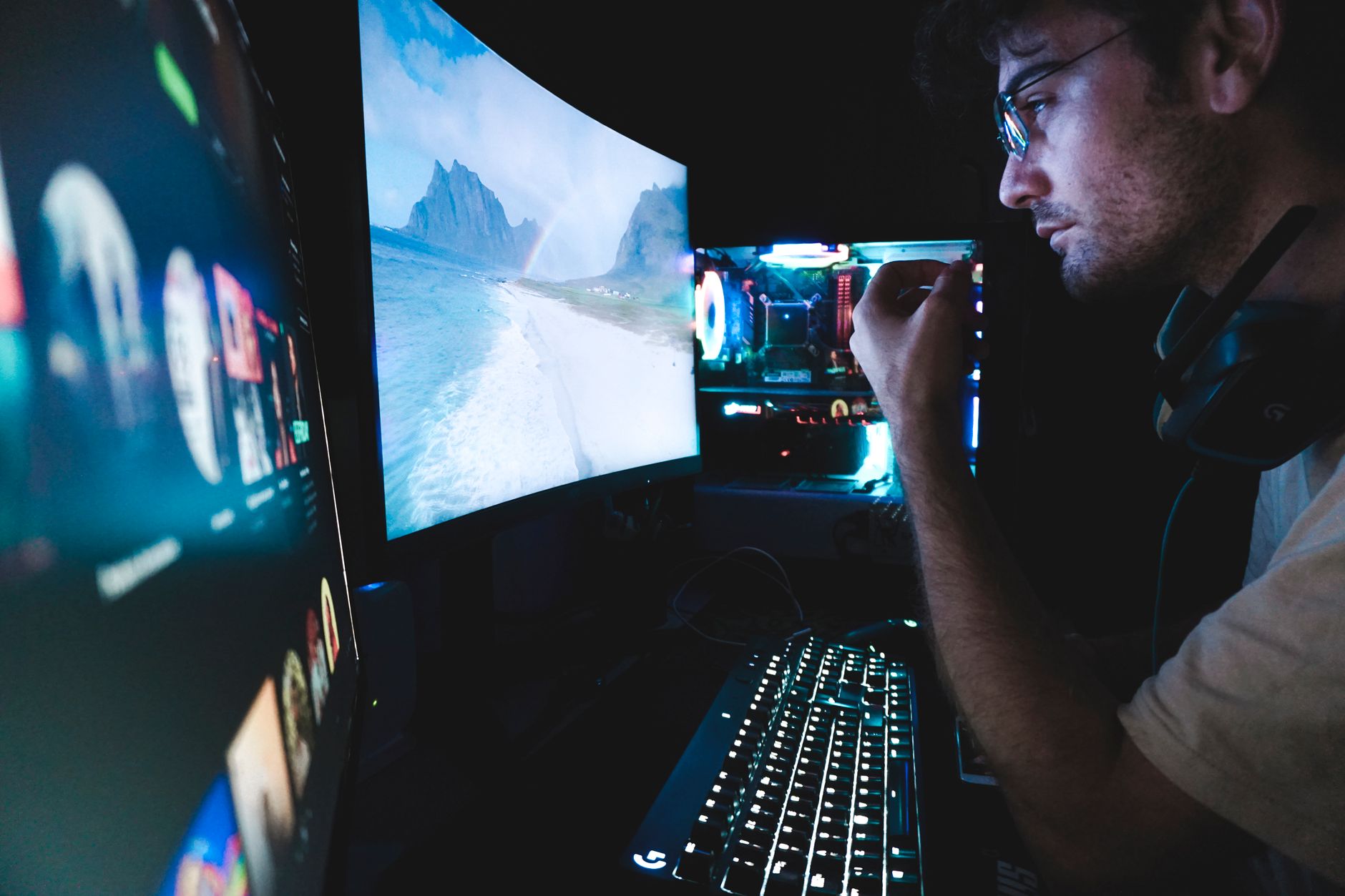
As a solo developer, you are not just the programmer or the artist — you are every department simultaneously, and the biggest threat to your project is not a lack of skill in any one area, it is the failure to manage the transitions between them. The practical answer is batching: group similar work into blocks, protect your deep-work time, and treat marketing and finishing tasks as first-class citizens, not things you will get to eventually.
Why Does Context-Switching Hurt Solo Devs So Much?
Every time you go from writing Blueprints to editing a texture to writing a store page, you pay a re-entry cost. Your brain has to reload a completely different mental model. In a team, specialists stay in their lane and the cost is low. Alone, you pay it constantly. Research on deep work puts the re-entry penalty somewhere around 20-30 minutes per switch, which means five context switches in a day can eat two hours without a single line of work being done. The fix is not to do one thing all day every day — that creates its own debt — but to batch similar cognitive modes together so you are not constantly cold-starting.
How Should a Solo Developer Structure a Week?
The structure that has worked for me at Sinfull Studios is to assign rough themes to days rather than hours. Monday tends to be design and planning — documentation, scope review, level blockouts on paper. Tuesday and Wednesday are deep code or systems work, the kind of Blueprints logic that requires holding a lot of state in my head. Thursday is art and asset work, which is more forgiving to interruption. Friday is the uncomfortable stuff: marketing tasks, social posts, devlog writing, and whatever finishing or polish work I have been avoiding. This is not rigid. A bug that blocks everything gets fixed the day it appears. But having a default rhythm means I do not have to decide what mode I am in — it is already decided.
What Is the “Fun Part” Trap and How Do You Avoid It?
Almost every solo developer has a preferred mode — usually code or art, whichever got them into game development in the first place. The trap is spending 80 percent of your time there while marketing, documentation, and project finishing quietly atrophy. A game with beautiful art and no store presence does not ship to an audience. A technically elegant system that never gets a trailer might as well not exist. The fix is to treat marketing and finishing work as non-negotiable deliverables with deadlines, not optional extras. Schedule them in your calendar the same way you schedule a milestone for your game loop. If they are not in the schedule, they will not happen.
When Should You Learn a Skill Versus Buy an Asset Versus Hire Out?
This is one of the most expensive decisions a solo developer makes, and the wrong answer in either direction costs real time. The framework I use is three questions: Will I use this skill repeatedly across projects? Is learning it on the critical path right now? Can I buy a result that is good enough for this project’s scope? If a skill is recurring and foundational — like understanding Unreal Engine’s material system — learning it is worth the upfront cost. If it is a one-time need for a specific asset, the Fab marketplace or a contractor is almost always the right call. Contracting is underused by solo devs because it feels like admitting a gap, but shipping a complete game with contracted audio is better than shipping nothing because you spent six months learning sound design.
How Do You Handle Marketing When You Have No Marketing Background?
You treat it as a learnable craft, the same way you learned to build a game loop. The minimum viable marketing habit for a solo developer is: capture footage as you build, write one short devlog per milestone, and post on one platform consistently. You do not need to do all platforms at once. Consistency on one channel beats sporadic presence everywhere. The hardest part is capturing the footage while your head is in development mode, which is why I keep a simple note on my desk: “Did you record today?” The vertical slice you build for playtest feedback is also your trailer material. That kind of double-use is how solo devs stay sane.
What Work Should Never Get Batched — What Needs Daily Attention?
Two things should touch every workday regardless of the weekly theme: a brief scope check and some form of play-through. The scope check is just a 10-minute read of your current milestone list to make sure you are not quietly drifting. Scope creep is how projects die slowly — one small addition at a time until the MVP is unrecognizable. The play-through is non-negotiable because it is the only way to catch game feel regressions before they compound. A system that felt good last week can feel broken after three days of unrelated changes. If you only test when you think you have broken something, you will miss slow decay entirely.
How Do You Know When a Solo Project Is Scoped Right?
The honest answer is that most solo projects are overscoped on first pass, often by a factor of three. A useful pressure test is to list every feature you plan to ship, then ask which ones are load-bearing for the core game loop. Anything that is not load-bearing is a candidate for cut or post-launch. This is not about making a lesser game — it is about making a shippable one. A finished small game teaches you more than an abandoned large one, and it gives you something to show the next time someone in Regina or anywhere else asks what you actually make.
What Does “Finishing” Actually Require That Development Doesn’t?
Finishing requires a different mindset than building. Building is additive — you make new things. Finishing is subtractive and corrective — you cut what does not work, polish what remains, and close every open loop. It also requires tolerating a phase where the game feels worse than it did mid-development, because polish and optimization can temporarily break flow before they restore it. Many solo developers abandon projects at exactly this point because it feels like regression. It is not. It is the last hard phase before something is actually done. Budgeting time explicitly for a “finishing sprint” — usually 20-30 percent of total development time for a scope-controlled project — is the only way to get through it without bailing.
Explore VFX, Game Dev and Virtual Production at Sinfull Studios for more.
Frequently Asked Questions
How should a solo game developer split their time across design, art, code, and marketing?
The most effective approach is to batch similar work into day-length or half-day blocks rather than switching between roles constantly. A common structure is to reserve early-week days for design and code (which require deep focus), mid-week for art (more interruptible), and at least one day per week specifically for marketing and finishing tasks. Treating marketing as a scheduled deliverable — not an afterthought — is what separates developers who ship from developers who do not.
When should a solo developer buy assets or hire a contractor instead of learning a new skill?
If a skill will be used repeatedly across multiple projects and is central to your workflow, learning it pays off. If it is a one-time need — specific audio, a particular visual effect, a localization pass — buying from a marketplace like Fab or contracting the work out is almost always faster and cheaper than learning it from scratch. The real cost of learning a peripheral skill is the opportunity cost of time not spent finishing your game.
What is the biggest mistake solo developers make with their time?
Spending the majority of time on whichever role they enjoy most — usually code or art — while marketing, documentation, and project finishing are deferred indefinitely. These deferred tasks do not go away; they compound into a backlog that eventually makes the project feel impossible to ship. The fix is to schedule finishing and marketing work as non-negotiable calendar items with the same priority as development milestones.
Related reading from Sinfull Studios
- Working as a One-Man Game Studio: What It Actually Takes
- Avoiding Burnout as a Solo Creator: Finishing Without Breaking Yourself
- Solo Dev Scope Discipline: Why Most One-Person Games Never Ship
- Game Design Fundamentals: What Game Designers Actually Do
Sinfull Studios is a Regina, Saskatchewan studio that builds games in Unreal Engine. Have a project or a question? Get in touch.