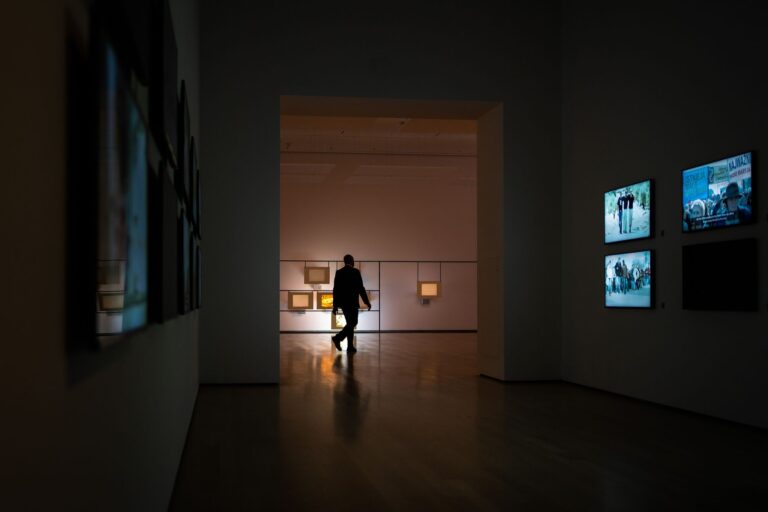
Good level design guides a player through space without announcing that it is doing so — the player feels like they discovered the path themselves, not that they were herded down a corridor. The core toolkit is simple: sightlines, landmarks, lighting, pacing, and teaching through consequence rather than text. These principles work whether you are building a tight indie puzzle game or an open-world environment in Unreal Engine, and they are learnable even when you are working solo with no dedicated designer on staff.
Why Should You Block Out First and Polish Last?
The single biggest mistake I see in solo dev level work — and one I have made myself at Sinfull Studios — is decorating before the space actually plays well. Blockout first means building the entire level in simple geometry: boxes, ramps, planes. No textures, no props, no lighting beyond basic visibility. You are testing flow, spacing, encounter rhythm, and traversal time. Once the blockout feels right, you lock it and layer in everything else. If you start polishing early, you become emotionally attached to geometry that should be deleted, and you will not delete it. Blockout gives you permission to be ruthless.
How Do Sightlines and Landmarks Actually Work?
A sightline is a clear visual path from the player’s current position to something worth moving toward. A landmark is a distinct, readable object or structure that the player can use to orient themselves — a tower, a burning wreck, a massive tree. In Unreal, you can test sightlines directly in the viewport by standing at the player start and asking: what is the first interesting thing I see, and does looking at it point me in the right direction? If the answer is “a wall” or “nothing,” the space is not working. Landmarks should be visible from multiple angles at different depths so the player is always triangulating their position, even subconsciously.
Can Lighting and Color Replace UI Waypoints?
Often, yes. Warm light draws the eye and signals safety or reward — a doorway lit in orange reads as “go here” before the player consciously thinks about it. Cool or desaturated light reads as threat or dead end. This is not a trick; it is exploiting the same environmental reading humans do in real spaces. In Unreal, a simple rect light or spot light aimed at a doorway or chest, with a warm temperature and moderate intensity, will pull a player across a room more reliably than a glowing UI arrow. The key is consistency: if warm equals forward, it must always mean that in your level. Break the rule once and the whole system falls apart.
What Is a Tension Curve and Why Does Pacing Matter?
A tension curve is the emotional arc of a level — how intensity rises, peaks, releases, and rises again. Pacing is how you control that arc through space and encounter design. A level that is all combat with no breathing room is exhausting. A level that is all exploration with no conflict is boring. The classic structure is: establish safety, introduce threat, escalate, force a peak moment, then release into recovery before the next cycle. In practical terms, this means putting a calm or safe room before a hard encounter, and a loot room or quiet moment after. Solo devs tend to skip recovery beats because they feel like “wasted” space — they are not.
How Do You Teach a Mechanic Through Space Instead of a Tutorial Popup?
Put the player in a situation where the correct action is the most natural response to what they see, and let failure have a low cost. If there is a pressure plate that opens a door, show the player a crate sitting near the plate before they need to use it themselves. They will test it. That test is the tutorial. The original Portal is the textbook example, but the principle applies to combat, traversal, and puzzle design equally. In Unreal, you can stage these “safe discovery” moments by controlling what the player can see before they commit to an action — use geometry and camera angles to frame the teaching scenario before the player enters the space where they need to apply it.
What Is the Difference Between Leading a Player and Railroading Them?
Leading means the player chooses the path but the design made one path more attractive than the others. Railroading means the player has no meaningful choice — the path is a corridor dressed to look like a world. The test is simple: can the player go the wrong way, and if so, what happens? If going the wrong way is impossible (invisible walls, locked doors everywhere else), you have a corridor. If going the wrong way costs them something — time, resources, a missed opportunity — but is physically possible, you have led them. Agency is not about infinite options; it is about the player feeling like their choice was real, even when you already knew which one they were going to make.
What Common Level Design Mistakes Kill Player Immersion?
- Symmetrical layouts that destroy wayfinding — if left and right look identical, the player has no spatial memory to draw on.
- Floating quest markers as a substitute for environmental storytelling — if the player is staring at a HUD waypoint, they are not looking at your level.
- Overloading the first room with detail that has no gameplay purpose — polish the critical path first, not the corners.
- Scale errors, especially in Unreal where the default scale can mislead — always prototype with a properly scaled mannequin or character and walk every space in Play mode, not just the editor viewport.
- Lighting that is so dark “for atmosphere” that the player cannot read the space — atmosphere and readability are not opposites, but you have to work to keep both.
How Do You Playtest Level Design When You Are Working Solo?
Watch someone else play and do not say a word. Your job is to record where they hesitate, where they look confused, where they go the wrong way. Every hesitation is data. Every wrong turn is either a navigation failure or a discovery — you need to know which. If you genuinely cannot get a live playtester, record yourself playing the level after a two-week break. Distance creates enough amnesia to catch the most obvious guidance failures. In Regina, I have found the local game dev community and even non-gamer friends willing to sit down for a 20-minute session if you ask directly. Use those sessions. Do not wait until the level is “finished” — test the blockout, then test each layer as you add it.
Explore Game Development with Unreal Engine at Sinfull Studios for more.
Frequently Asked Questions
How do you guide a player through a level without using UI waypoints or tutorial text?
Use environmental cues instead: warm or bright lighting aimed at doorways and objectives, clear sightlines from the player’s position to the next point of interest, and distinct landmarks the player can use to orient themselves. Stage discovery moments where the safe, obvious thing to try is exactly the mechanic you want them to learn. If the space is designed correctly, the player navigates by reading the world, not the HUD.
What is the blockout method in level design and why does it matter?
Blockout (also called greyboxing or whiteboxing) means building your entire level in simple placeholder geometry — boxes, ramps, and planes — before adding any art, textures, or props. The goal is to test flow, encounter spacing, traversal time, and pacing purely through space. Blocking out first lets you iterate and delete geometry freely, before emotional attachment to polished assets locks you into bad layout decisions.
What is the difference between leading a player and railroading them in level design?
Leading means the player has real choices but the design makes one path more attractive through lighting, sightlines, or rewards — the player feels like they decided. Railroading means only one path is physically possible, typically through invisible walls or locked doors everywhere else. The practical test: can the player go the wrong way? If yes, and it has a consequence rather than a hard block, you are leading them. If no, you have built a corridor.
Related reading from Sinfull Studios
- Game Design Fundamentals: What Game Designers Actually Do
- Core Game Loops: Designing the Action Players Repeat Without Noticing
- Prototyping a Game Mechanic Fast: Prove the Fun Before You Build the Game
- Working as a One-Man Game Studio: What It Actually Takes
Sinfull Studios is a Regina, Saskatchewan studio that builds games in Unreal Engine. Have a project or a question? Get in touch.