
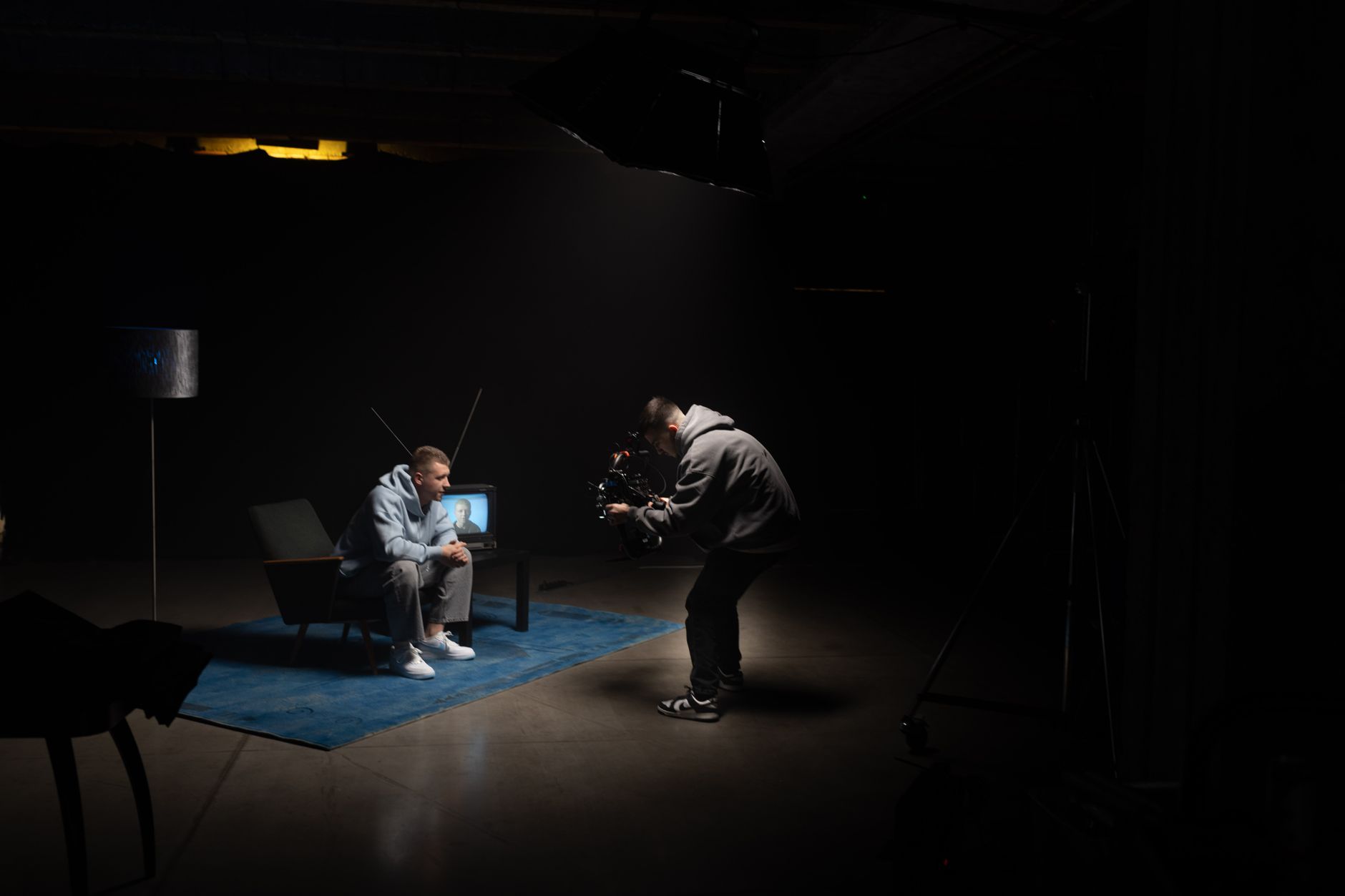
Saskatchewan’s combination of cold climate, available land, and regional power infrastructure makes it a credible location for compute and data-centre capacity serving media, AI, and virtual production workloads — and that geographic reality has direct implications for studios like Sinfull Studios in Regina that are building serious compute-dependent pipelines. Whether the workload is real-time rendering in Unreal Engine, GPU-accelerated AI inference, or the kind of heavy batch rendering that virtual production demands, proximity to efficient, affordable compute matters more than most people in the regional film industry have historically stopped to consider.
Why Does Climate Matter for Data Centres?
Cooling is one of the largest operating costs and engineering challenges in any data centre. In a cold climate like Saskatchewan’s, ambient air temperatures are low enough for a significant portion of the year that facilities can use economizer or free-air cooling modes — drawing in outside air or using it to pre-cool water loops — rather than running mechanical refrigeration continuously. That reduces energy consumption and operational cost. It is not a small advantage. The same heat dissipation problem that makes GPUs expensive to run in a warm climate becomes easier to manage when your environment does part of the work for you. This is not a Saskatchewan-specific claim; it is the same logic that led hyperscale operators to build in Scandinavia, Iceland, and the northern United States. The prairies share the underlying physics.
What About Power Availability on the Prairies?
Compute-intensive workloads — GPU render farms, large model training runs, real-time rendering clusters — are significant power consumers. Saskatchewan has historically had lower population density relative to its land area, which means there are regions with grid capacity that is not already saturated by urban demand. That headroom is meaningful for a facility trying to bring significant electrical load online. The province also has an ongoing conversation about its energy mix and diversification, including wind and other generation sources, which is relevant for studios and data centres that care about the carbon footprint of their compute. None of this means Saskatchewan has unlimited capacity or that buildout is trivial — grid interconnection is always an engineering and regulatory process — but the baseline conditions are more favourable than in land-constrained, power-saturated urban centres in southern Ontario or coastal metros.
Does Latency Actually Matter for Virtual Production Pipelines?
Yes, and it is underappreciated in discussions about cloud-based production tooling. Virtual production using an LED volume and in-camera visual effects — the kind of work Sinfull Studios builds for — depends on real-time rendering. Unreal Engine is driving the LED wall live, on set, synchronized to camera tracking data. That pipeline cannot tolerate the round-trip latency of a distant cloud renderer. The compute driving the wall has to be physically present or very close. For adjacent workloads — remote review, collaborative editorial, asset streaming, AI-assisted tasks like rotoscoping or upscaling — latency still matters. A regional compute node in Saskatchewan serves Saskatchewan and Alberta-based productions with dramatically lower round-trip times than routing everything through Toronto, Montreal, or a US data centre. For creators and productions based here, that is a practical advantage, not a theoretical one.
What Workloads Are Actually Compute-Hungry in Modern Production?
- Real-time 3D rendering for LED volumes — requires high-end GPU compute on-premise, on set
- Gaussian splatting and NeRF-based 3D reconstruction from video or photo capture — GPU-accelerated, can be batched
- AI video generation and enhancement tools — inference workloads that benefit from local or low-latency GPU access
- Traditional VFX render farm tasks — CPU and GPU batch rendering for compositing, simulation, and final frames
- Large environment and asset processing in Unreal Engine — Nanite mesh processing, Lumen baking, World Partition streaming
- Machine learning model fine-tuning for production-specific applications — training runs that can last hours or days on GPU clusters
How Does This Connect to AI Tooling in Film and VFX?
AI tools are moving into nearly every phase of production — pre-visualization, on-set capture, post-production cleanup, and delivery. Tools using generative models for video, image, and 3D content (including tools from companies like Luma AI, which builds on Gaussian splatting and NeRF-based capture as well as generative video) require meaningful GPU compute for inference. Running those tools well — with acceptable turnaround times and without unpredictable cloud costs — favours studios that either have direct access to capable local hardware or a short path to regional compute resources. A Saskatchewan-based studio investing in compute infrastructure is not just buying rendering capacity; it is buying the ability to iterate quickly on AI-assisted workflows without being entirely dependent on distant, metered cloud services.
Is Regional Compute Infrastructure a Realistic Near-Term Possibility for Saskatchewan?
The honest answer is: the foundational conditions are favourable, and serious conversations about data-centre and compute investment in the prairies are not new. What has changed is the demand signal. The explosion in AI workloads — from inference at scale to model training — has stressed existing data-centre supply in established markets, driving operators and investors to look at second-tier markets with the right physical attributes. Saskatchewan checks the climate and land boxes clearly. The missing pieces have historically been ecosystem density and a clear local demand signal from industries that actually need the compute. Media and virtual production is a relatively small slice of that demand, but it is part of a broader argument that includes AI, agriculture technology, energy sector analytics, and government workloads. For the film and creative technology sector specifically, even a modest regional node changes the economics of what is practical to build and run locally.
Why Does This Strategic Picture Matter for a Studio Investing in Virtual Production?
At Sinfull Studios, the bet on virtual production and real-time 3D is partly a bet on compute infrastructure getting better and more accessible in the region over time. The LED volume, the Unreal Engine pipeline, the AI-assisted tools we are evaluating — none of that works well at a distance. It requires capable hardware close to where the work happens. Building that capability in Regina, in Saskatchewan, is not a concession to geography. It is a reasoned position based on the same factors that make the prairies attractive for data-centre operators: cold, space, and power that has not already been spoken for. The studios and productions that understand the compute layer underneath modern production — and position themselves close to it — will have structural advantages as these pipelines mature.
Explore VFX, Game Dev and Virtual Production at Sinfull Studios for more.
Frequently Asked Questions
Why is Saskatchewan a good location for AI and media compute infrastructure?
Saskatchewan’s cold climate reduces data-centre cooling costs by enabling free-air and economizer cooling for much of the year. The province also has available land and grid capacity that is less saturated than in major urban centres, making it a practical candidate for compute infrastructure serving AI, rendering, and media production workloads in the prairie region.
Can virtual production work be done using cloud compute, or does it need local hardware?
The core real-time rendering pipeline for LED volume virtual production — where Unreal Engine drives the wall live and synchronized to camera tracking — cannot use distant cloud compute because the latency is too high. That workload requires GPU hardware on-premise or very nearby. Adjacent tasks like batch rendering, AI inference, and collaborative review can use cloud resources, but lower-latency regional compute still improves turnaround times and cost predictability.
How do Gaussian splatting and NeRF fit into virtual production pipelines?
Gaussian splatting (3DGS) and NeRF-based reconstruction allow real-world environments or objects to be captured photographically and converted into 3D representations that can be used inside Unreal Engine or other real-time tools. Both are GPU-accelerated processes. In a virtual production context, they enable rapid creation of photorealistic digital environments from location scans or studio capture, reducing the time and cost of building fully hand-modelled assets.
Related reading from Sinfull Studios
- Running Unreal Engine at Scale: The Hardware Reality of Real-Time VFX
- Cloud Rendering and Render Farms: When to Offload Unreal Workloads
- The Compute Behind Virtual Production: Why an LED Volume Is an Infrastructure Problem
- What Is Virtual Production? A Plain-English Guide for Filmmakers and Brands
Planning a virtual production, Unreal Engine, or VFX project in Regina or anywhere in Saskatchewan? Request a quote from Sinfull Studios.