
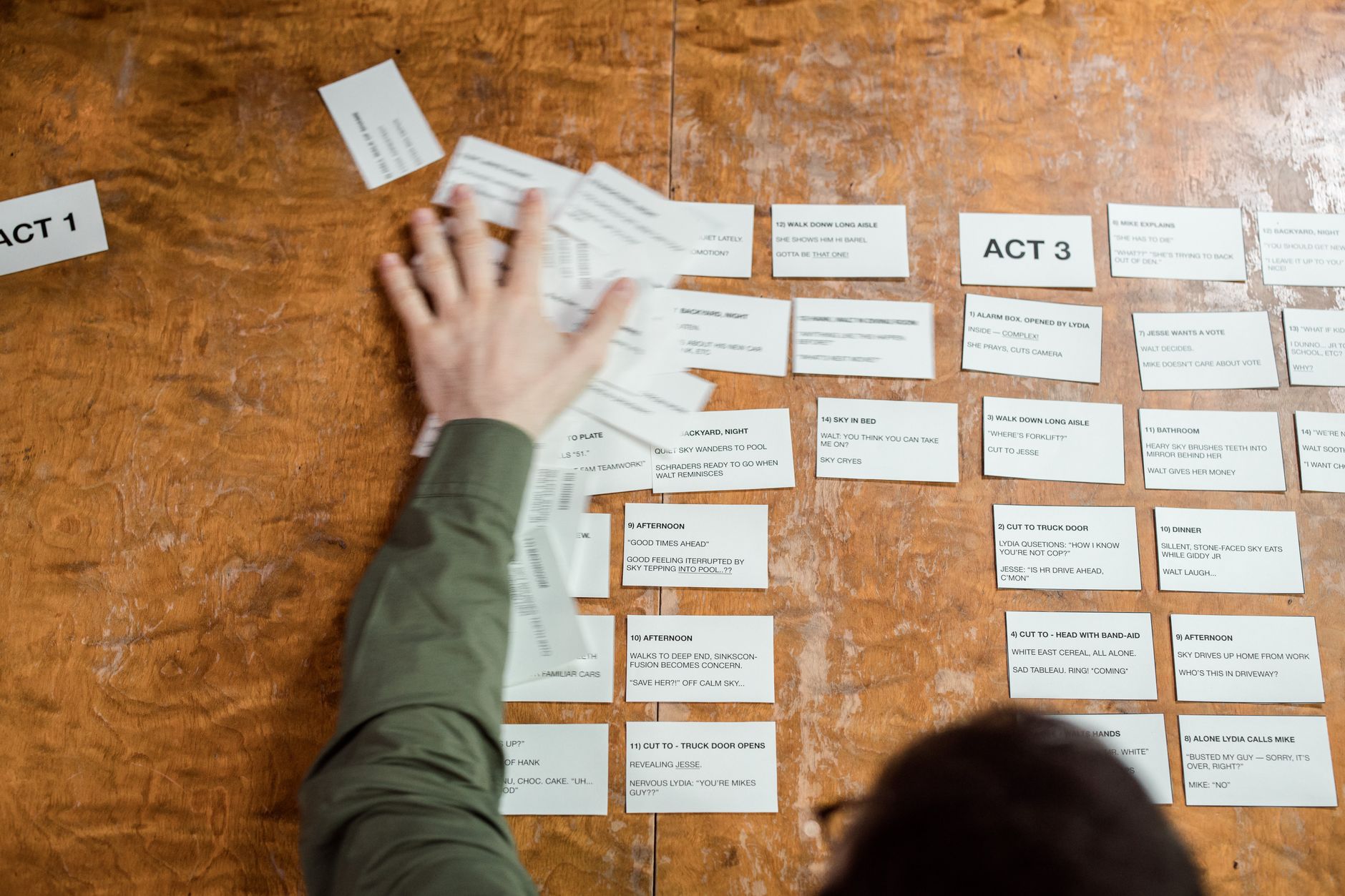
Script coverage is a written evaluation of your screenplay — a logline, synopsis, and honest ratings on structure, character, dialogue, and market potential, delivered by a professional reader. At Sinfull Studios in Regina, Saskatchewan, I offer flat-fee coverage and development notes because I have seen firsthand, on real productions, how much the quality of the material matters before a single dollar of production budget moves.
What Does Script Coverage Actually Include?
A standard coverage report has several distinct parts. The reader — often someone with industry experience who evaluates scripts professionally — works through your script and delivers:
- A one- or two-sentence logline distilling your premise
- A one-to-two-page synopsis of the story as written (not as you intended it)
- Ratings — typically PASS, CONSIDER, or RECOMMEND — broken down by premise, plot/structure, character, dialogue, and overall
- Written notes explaining what is working, what is not, and why
That PASS/CONSIDER/RECOMMEND scale is the industry shorthand that development executives and producers use to triage the volume of submissions they receive. A RECOMMEND is rare. Most professional scripts land at CONSIDER on their best day before revisions. A PASS is not a death sentence — it is information.
Why Do Writers Get Coverage Before Sending a Script Out?
Because first impressions in this industry are almost impossible to recover from. If you submit a draft that has a broken second act or flat supporting characters, that reader or development executive remembers. Getting coverage first lets you fix those problems on your own time, before anyone who matters to your career has seen the material. Think of it as a rehearsal before the actual pitch.
There is also a psychological blind spot that every writer has with their own work. You know what you meant to write. A coverage reader only knows what is on the page — which is exactly what a producer or executive will encounter.
What Is the Difference Between Coverage and Development Notes?
Coverage is an evaluation — it tells you where the script stands right now and why. Development notes go a step further. They are prescriptive: they identify specific story problems and suggest directions for solving them. Development notes are more of a collaboration, the kind of conversation a producer or story editor has with a writer in active development.
In practice, many coverage services blur this line and include some development-style notes in the written section of the report. That is what I aim for through my script and development services — not just a grade, but actionable direction you can actually use in your next draft.
Who Reads Your Script When You Submit to a Production Company?
Almost never the producer or showrunner on the first pass. Most production companies, agencies, and studios use readers — junior staff or freelancers — to cover unsolicited or query submissions. Those readers generate the same PASS/CONSIDER/RECOMMEND grid before anything moves up the chain. Your script has to survive that first read before a decision-maker ever sees it. That is the reality of submission volume in this industry.
Does Coverage Guarantee Anything?
No — and I will not pretend otherwise. Coverage tells you how your script reads to a professional reader at this moment. It does not sell your script, and no coverage service or producer should promise that. Spec script sales are rare. Options are more common but still competitive. What coverage does is reduce the risk of sending out material that is not ready, which is one of the few things in this process that you can actually control.
One more thing worth saying plainly: a legitimate producer or coverage service charges for their professional time on a flat-fee basis. Any person who asks you to pay an upfront fee to “shop” or “shop and represent” your script — where the fee is framed as access to buyers — is running an advance-fee scam. Run the other direction.
How Do You Use Coverage Once You Have It?
Read it twice. The first time you will likely disagree with half of it. That is normal. Let it sit for a day and read it again. What you are looking for are the notes that show up more than once, the structural observations that — once you see them — you cannot unsee. Those are the ones to act on.
Coverage is most useful as a prioritization tool. You cannot fix everything at once, and trying to often creates new problems. Use the ratings breakdown to identify which element — structure, character, dialogue, concept — is the weakest link, then address that in your next draft before going back out.
When Does Coverage Fit Into a Broader Development Strategy?
Coverage is usually the first step. After revisions, the next layer of material is your pitch package — a logline, a one-page synopsis, and ideally a pitch deck that sells the tone, world, and market position of your project. For writers developing an original series or feature with commercial potential, a proof-of-concept teaser can demonstrate the visual and tonal execution to buyers who need to see, not just read, what your story looks like. Sinfull Studios offers flat-fee coverage and decks, with proof-of-concept teasers quoted by scope, so the work can scale with where you actually are in your development process.
Explore script coverage, pitch decks, and proof-of-concept production at Sinfull Studios for more.
Related reading from Sinfull Studios
- How to Make a Film or TV Pitch Deck
- Why a Proof-of-Concept Teaser Sells Your Screenplay
- How to Sell a Screenplay in Canada
- Script & Development Services
Have a screenplay? Explore script coverage, pitch decks, and proof-of-concept production at Sinfull Studios, or get a free quote.
Frequently Asked Questions
What does script coverage cost?
Pricing varies by provider and the depth of notes included. At Sinfull Studios, coverage is offered on a flat-fee basis — check the script services page for current rates. Be cautious of any service that charges a large upfront fee and promises to sell or shop your script; legitimate coverage is paid for professional reading time, not access to buyers.
Is a PASS on coverage the end of the road for my script?
No. A PASS means the script in its current draft is not ready to recommend to a buyer — it does not mean the concept or story is unsalvageable. Most produced films went through multiple rounds of notes and major revisions before they were greenlit. Coverage that results in a PASS with clear, specific notes is genuinely useful because it tells you what needs to change before you submit again.
Can I submit my script to producers without getting coverage first?
Yes, there is no rule requiring coverage before submission. But submitting without it increases the risk that a professional reader will catch problems you could have fixed privately. Coverage is about protecting your first impression with the people who matter to your career — once a company has passed on a draft, it is very hard to get them to look at a revision of the same project.