
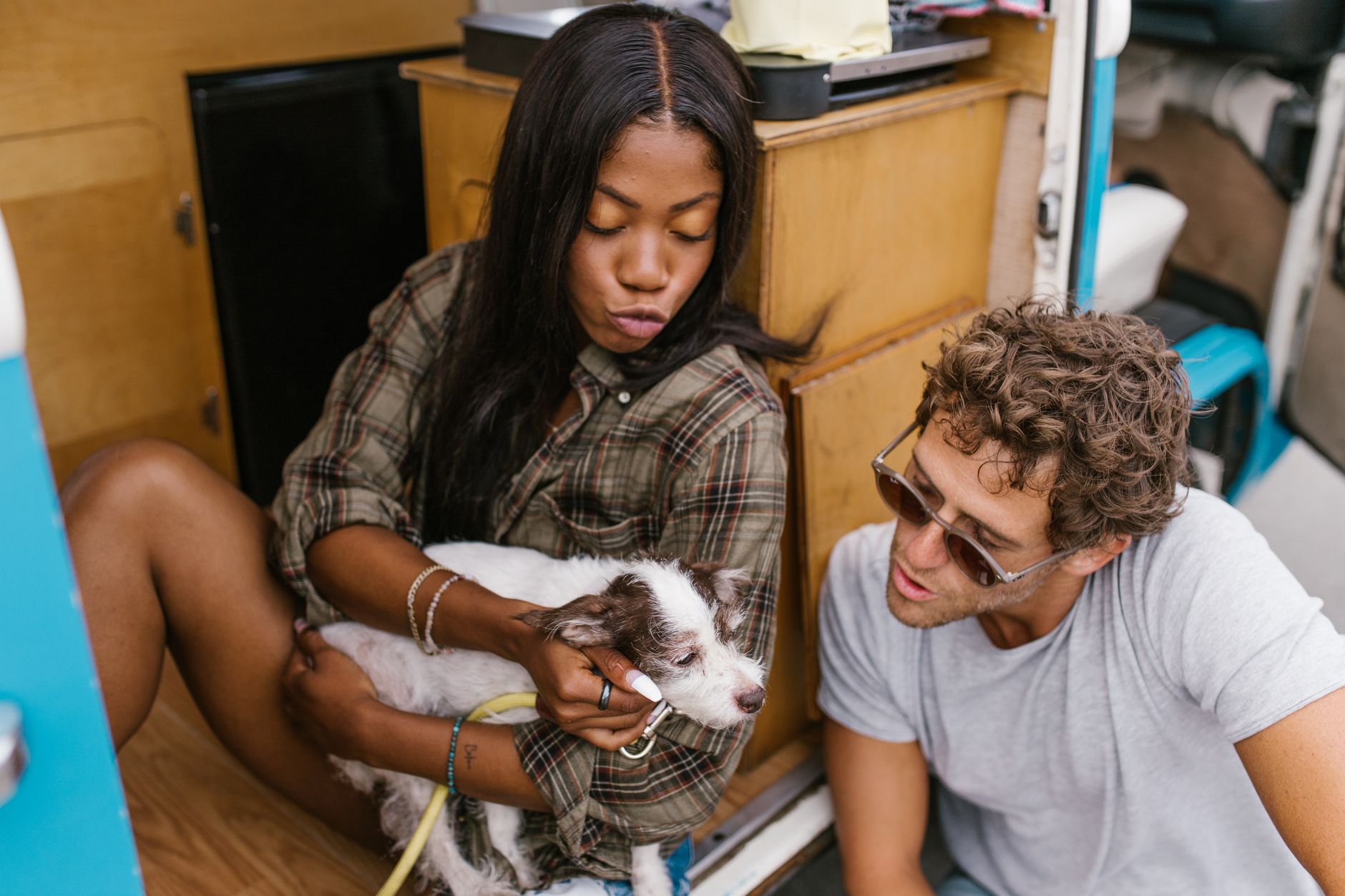
Heat Is the First Problem You Have to Solve
Van life travel with a dog or cat in Saskatchewan means dealing with prairie heat that hits harder and faster than most people expect. Interior van temperatures can exceed 50 degrees Celsius within minutes of parking in direct sun, even on a day that feels mild outside. No trip is worth an animal in that environment.
The practical answer is shade management and airflow, not just cracking a window. A roof vent fan with a thermostat — the Maxxair or Fan-Tastic style units — makes a real difference when parked. Reflective window covers on every pane keep the interior from becoming an oven within the first ten minutes. If you cannot guarantee shade and airflow, the animal comes with you. That is the rule, and it is not negotiable in a Saskatchewan summer.
Travel dogs and cats that are new to the van should never be tested on a hot day. Start them in cooler shoulder seasons — May or September — so they associate the van with comfort before heat becomes a factor.
Rest Stops, Water, and Reading the Animal
Dogs need more frequent breaks than most road trip guides suggest — every two hours is a floor, not a ceiling, for active breeds. Cats in a van do well with a litter box that is accessible during stops and secured so it does not shift while driving. Both animals need water available at every stop, not just once in the morning.
Saskatchewan has long stretches between towns, which means you need to read your animal before the stretch, not during it. A dog that is restless or panting before you leave Moose Jaw does not become calmer on the hour between there and Swift Current. Stop early, let them move, give water, then continue.
Know what your specific animal looks like when it is stressed versus tired. Panting in a dog can mean overheating, anxiety, or simple excitement — context matters. Cats that hide and refuse to come out are usually fine; cats that vocalize continuously on a long drive may need a vet check before the next leg.
Vet Access on Saskatchewan Roads
Regina and Saskatoon both have emergency veterinary clinics. Between them, options thin out quickly. The practical preparation is a list of veterinary contacts along your route saved offline — not bookmarked in a browser tab that requires signal. The Saskatchewan Veterinary Medical Association website has a directory worth downloading before you leave.
Carry a basic animal first aid kit: gauze, medical tape, saline for eye or wound rinse, your animal records, and a copy of any medications they are on. If your dog or cat takes a regular medication, carry more than you think you need. Rural pharmacies do not stock pet prescriptions.
Gear That Actually Earns Its Place in the Van
The gear list that sounds good in theory and the gear that actually stays in a build are different things. What survives the cut after a few months of actual van life travel with a dog in Saskatchewan:
A collapsible water bowl takes no space and gets used at every stop. A long tie-out line for camp stops gives the dog range without requiring you to hold the leash through every meal. A secured crate or barrier keeps the animal safe in the event of a sudden stop and keeps them from interfering with driving. A cooling mat in summer earns its footprint in July and August.
What does not earn its place: novelty travel beds that shift around, water dispensers that leak in motion, and any gear that requires setup time at every stop. The standard for van gear with animals is simple — if it is not fast and reliable on the side of a gravel road outside of a small Saskatchewan town, it does not belong in the build.
Explore the Van Life and the G20 build at Sinfull Studios for more.
Related reading from Sinfull Studios
- The Prairie Van-Life Toolkit That Actually Earns Its Space
- Saskatchewan Van Life Routes: The Best Roads to Drive From Regina and What to Expect
- Converting a Full-Size Van: The Order of Operations That Actually Makes Sense
- Van Life in Regina
Based in Regina, Saskatchewan. Explore Van Life or request a quote from Sinfull Studios.