
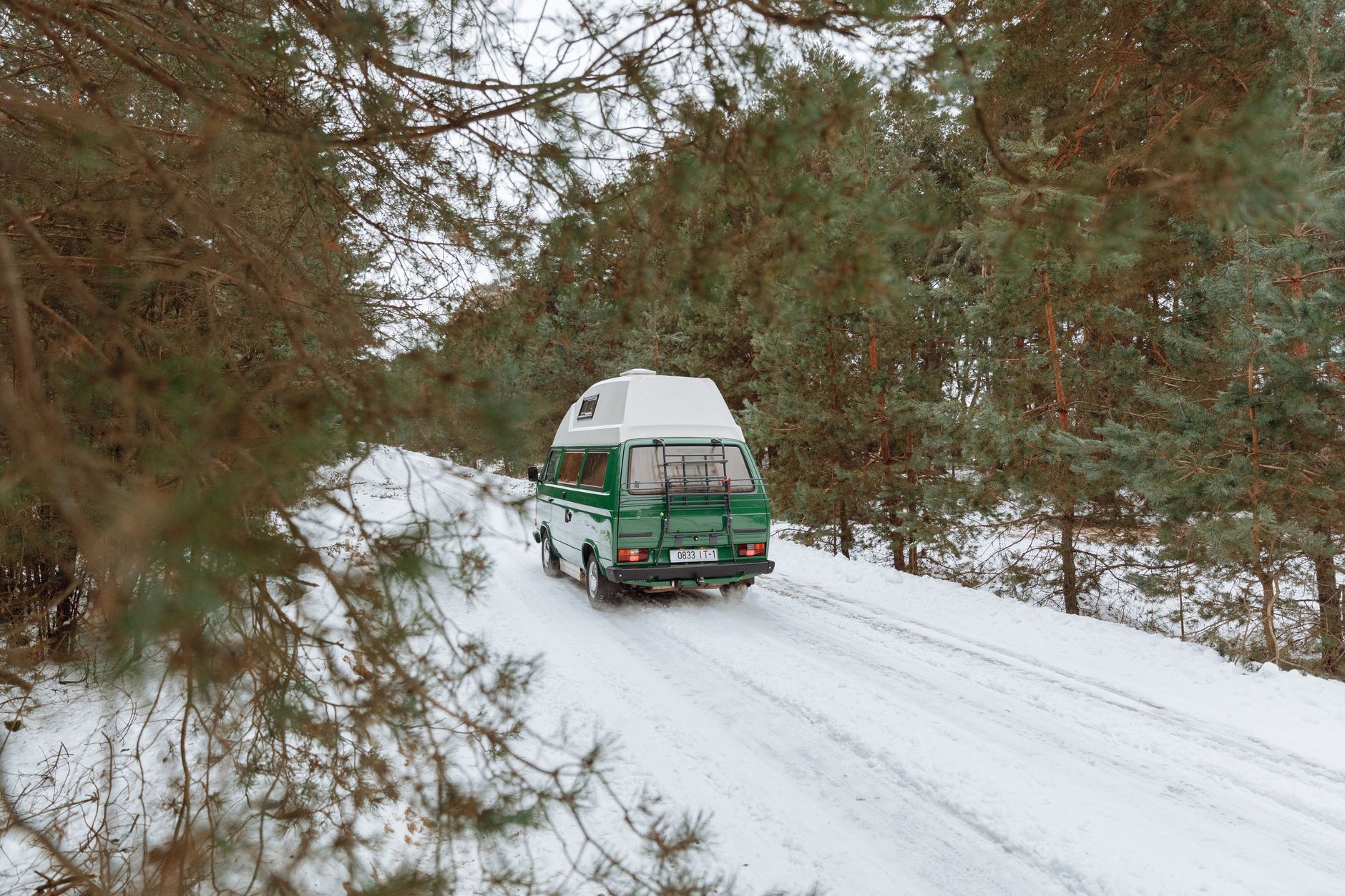
The Gap Between Planning and Reality
Nobody who has not done it fully understands what a Saskatchewan winter inside a van actually means. The YouTube videos make it look manageable. The gear lists make it look solvable. The first real cold snap at -30 makes it look like a mistake. This post is an honest breakdown of the things that went sideways — not to discourage anyone, but because the lessons were expensive and the information is hard to find before you need it.
Moisture Is the Invisible Enemy
The single biggest surprise in winter van life is not the cold — it is the moisture. Breathing produces water vapor. Cooking produces water vapor. Two people sleeping in a sealed van overnight can deposit a shocking amount of condensation on every cold surface by morning. In summer this is a minor annoyance. In a Saskatchewan winter it becomes a serious problem fast.
Without a daily ventilation routine, moisture accumulates in the insulation, behind wall panels, and inside cabinetry. It does not just cause mold — it destroys the insulation value of the build and causes wood components to swell and warp. What was missed early on was that ventilation cannot be optional in cold weather. Cracking a roof vent for 15 to 20 minutes every morning, even at -25, is not a comfort choice — it is a maintenance requirement. A diesel heater running alone does not address moisture. It heats humid air. The vapor has to leave the van.
The fix: build a ventilation habit into the morning routine before anything else. Run the heater with the roof vent cracked until the windows clear. Every day. No exceptions.
The Battery Bank Is Not What the Spec Sheet Claims
Lithium iron phosphate batteries are the correct choice for van builds. That part of the conventional wisdom holds up. What the spec sheets do not highlight is that cold temperature significantly reduces usable capacity. A 100Ah lithium battery that performs as rated at room temperature performs closer to 60Ah at -20 Celsius. At -30, some batteries will shut down their BMS entirely as a protection measure.
The van build that felt well-sized for three-season use became inadequate by December. Running a diesel heater, a fridge, lighting, and charging devices off a 200Ah bank with reduced cold-weather capacity meant running out of power before morning on long cold nights — right when the heater was needed most.
The practical solution is twofold: oversize the battery bank for winter use (plan for 60 percent of rated capacity as the working number), and insulate the battery compartment so it benefits from cabin heat rather than sitting against a cold exterior wall. Some builders add a small heating pad rated for lithium batteries. That investment pays for itself quickly.
Diesel Heater Maintenance Is Not Optional in Extreme Cold
Chinese diesel heaters — the Vevor and Webasto-clone units that dominate the van life market — work well in moderate cold. In a Saskatchewan winter they require active maintenance attention that most install guides do not mention.
Fuel gelling is a real problem below -25. Standard diesel sold at most prairie gas stations is rated for cold, but fuel sitting in an exposed line run along the undercarriage can gel before it reaches the heater. Running the fuel line inside the van where possible, or using a quality winter diesel additive, addresses this. The other common failure point is the glow plug. Glow plugs work harder in extreme cold during startup cycles and fail more frequently as a result. Carrying a spare glow plug and knowing how to swap it is not optional — it is the difference between a cold night and a fine night when the heater fails at 2am in a rural campsite.
Carbon buildup in the burn chamber also increases with frequent cold starts. A monthly burn chamber cleaning cycle keeps the unit running cleanly and reduces error codes.
The Psychological Weight of a Small Space in a Prairie Winter
This part does not get discussed enough. A van is around 60 to 80 square feet of living space. In summer, that space expands — the outdoors is accessible, the doors stay open, the van becomes a base camp rather than a container. In a Saskatchewan January with a windchill of -40, the van shrinks. The doors stay closed. The outdoors is hostile. The space that felt liberating in August starts to compress psychologically.
What helped was treating time outside the van not as an optional activity but as a scheduled maintenance item for mental health. Daily coffee at a library or cafe. Errands planned with intention rather than consolidated to minimize trips. Finding an indoor climbing gym or pool. The point is not to avoid the van — it is to prevent the van from becoming a cell by ensuring regular contact with larger spaces and other people.
Winter van life in Saskatchewan is doable. Thousands of people do it. But it requires different preparation than three-season builds assume — in the mechanical systems, in the power bank sizing, and in how time outside the vehicle gets treated. The learning curve is real. Getting ahead of these specific problems makes the difference between a miserable January and a genuinely functional one.
Explore the Van Life and the G20 build at Sinfull Studios for more.
Related reading from Sinfull Studios
- Saskatchewan Van Life Routes: The Best Roads to Drive From Regina and What to Expect
- Powering a Van Build: Solar, Batteries, and a Realistic Electrical System Cost
- Short Saskatchewan Weekend Routes From Regina That Still Feel Like A Real Escape
- Van Life in Regina
Based in Regina, Saskatchewan. Explore Van Life or request a quote from Sinfull Studios.